Student Journalism, Student Freedoms

Although Eduflack is several decades removed, I still look fondly on his student journalism experience. In high school, I remember a principal who would often tell us what we could or should not be writing about. At the time, I didn’t think much of it. It was high school. I was engaged in other activities. And I just didn’t think it really affected me much.

College was a different story. While I was a student at the University of Virginia, I really see my college years at The Cavalier Daily. The CD was an independent newspaper at U.Va. We published daily, typically 12 or 16 pages a day. I ultimately served as managing editor of the paper, overseeing a volunteer staff of nearly 150 and the content that was put out each day. We never got paid. We never received college credit. We did it for the love of journalism.

When I was on the managing board, we faced a particularly delicate issue involving the University’s Honor Committee and the son of a prominent internationally recognized businessman. We broke the story. We had papers like The Washington Post and The Richmond Times-Dispatch looking to our coverage (and at times, even calling our printer to try and get an advance read before the papers hit the news stands in the morning).

Because of the high profile, it was a tough issue for our managing board — five kids in their early 20s — to navigate. We received many threats. We had the University and others talk about lawsuits against us for violating the sanctity of the Honor system. We had legal counsel on speed dial (a former CD alum who looked out for us and did a helluva job). And we continued to publish. We continued to push. We continued to throw a spotlight on a system that was treating a student of incredible means and of powerful upbringing differently than the average student when it came to our single-sanction Honor system.

Our news coverage ended up winning multiple awards from the Virginia Press Association and praise from free press groups. Every step along the way, we heeded the words of Thomas Jefferson that appeared on our masthead every morning.

For here we are not afraid to follow truth wherever it may lead, nor to tolerate any error so long as reason is left free to combat it.

Why do I take this little trip down memory lane? I do so because of the student journalists of the Playwickian, a student newspaper at Neshaminy HIgh School in Pennsylvania. The newspaper has had student activity fees withdrawn and its advisor and journalism teacher suspended. According to news reports, the principal and the school board have sought to dictate editorial policy for the newspaper, demanding the student journalists follow orders from on high. And just last week, the editor in chief was stripped of her position by the administration.

What was their offense? Did these student journalists print profanities? Did they libel school or community leadership? Did they violate federal law about the privacy of student records?

No. They refused to publish the school mascot’s name. The name in question? Redskins. These journalists followed the lead of publications like The Washington Post and refused to use what they saw as a racist term in editorial coverage (namely a letter to the editor). And when facing pressure, these journalists and their advisors stood their ground.

You can read more about their issue on the #FreethePlaywickian Indigogo campaign.

Around the nation, we are seeing professional media outlets praised for doing what these student journalists are doing. We are also reading more and more about media freedoms around the world being at risk. We should be honoring these students for taking a stand they believe in. We should be praising them for embodying everything a free press stands for. We should raise them up as an example of how students and the media can lead.

This isn’t about whether one feels the Redskin mascot is racist or not. This is about media freedoms. It is about student journalism. And it is about teaching one to stand up for their beliefs. It is, as Jefferson wrote, about using reason to combat those errors we see in society.

I proudly stand with the Playwickian I just pledged my financial support to help them.. And I hope some of these journalists will one day join The Cavalier Daily and other fine examples of student journalism found around the country.

Ban a Book? Really?

It’s Banned Books Week. It’s a little disappointing that we, as a society built on freedoms, needs to acknowledge that we still have a problem in trying to censor material, particularly material that is part of the learning process.

Over on Twitter, the newly relaunched Reading Rainbow is soliciting stories from folks on their personal banning experience. Just check out @readingrainbow and their #BannedBooksWeek and #MyStory hashtags to see some of the tales being told. It is particularly surprising to see the role that some librarians, the very folks who should be protecting and promoting said books, have played in the process.

Which gets us to Eduflack’s tale. I remember it all quite well. When I was in elementary school, I was a huge fan of Judy Blume, I read any book that had her name on the cover. I loved them. Owned many of them, and read them over and over and over again.

One day, Eduflack went to the local library to check out one of Blume’s titles he didn’t have. The book? Are You There God?, It’s Me Margaret. If you are unaware of the book, go ahead and click on the title and check out the Wiki summary.

At any rate, the local librarian wouldn’t let me check the book out of the library. I had a library card. I hadn’t maxed out my checked out books yet. I had no overdue books. But I was blocked at the desk.

The librarian then placed a call to my mother. Yep, getting ratted out to my own mom. The librarian explained that I wanted to check out this book. She wasn’t going to let me, because she felt the book was inappropriate, both because of my age and because of my gender. My mom, a good liberal and a great English teacher, didn’t quite understand the problem. She told the librarian to let me have the book. There would be no book banning in the future Eduflack’s house.

Then dear ol’ mom went out and bought me the book, so I wouldn’t have future issues at the local library. I remember reading the book many times in the years after the incident. And somehow I managed to survive without any emotional scars or spiritual questions or concerns about my gender.

I’m always amazed by the books I see on the “banned” list here in the United States. Books that I adore and that have shaped my thinking and my life. Robert Penn Warren’s All the King’s Men (a far better book than either version of the movie). Catcher in the Rye. Go Ask Alice. How to Eat Fried Worms. James and the Giant Peach. Lord of the Flies. A Wrinkle in Time. Most things written by Judy Blume … and by S.E. Hinton.

One of my favorite movies (and a damned good book by Christopher Buckley) is Thank You for Smoking. The protagonist is a tobacco lobbyist. When asked what he would do when his son was of age and wanted to smoke, he replies, “I’d buy him his first pack.”

That’s how I feel about banned books. Either of my kids want to read a title that a teacher or a librarian or a talking head says is inappropriate material for a child or teen, I’ll buy them their own copy. My mom did it for me. I’ll carry it forward.

A College-Educated United States

For the past five years, the education community has been fond of quoting President Obama’s 2009 goal of having more college graduates, per capita, in the world by the year 2020. It is an area where we were once a leader, but have seen other nations pass us by.

That isn’t saying that we don’t have a huge number of Americans who are graduating from college. Nor does it mean that the number of college grads has seen a decline in recent years or recent decades. We are talking per capita numbers here, an area where it can be difficult to pick up gains when the percentage of P-12-age students is rapidly growing.

That’s why Eduflack was fascinated to see a new map, offered by the folks at Vox, which looks at the growth in the number of Americans gaining a college education over the past four decades. Vox bills it as a chance to “watch the US get more educated in 20 seconds.” And they are right. You can look state by state, major urban area by major urban area, and see the map change before your beautiful eyes.

What is Vox charting? In 1970, one in 10 Americans had at least a bachelor’s degree (according to data provided by the USDA Economic Resource Services). Today (OK, 2012), that number is now almost triple that.

As Vox writer Danielle Kurtzleben notes:

College degrees clearly became more commonplace nationwide over the last 40 years, but the geography of them is striking today. Broadly speaking, the South remains the place where degrees are the least common. Meanwhile, cities — and particularly the northeastern Amtrak corridor — are where college graduates have concentrated.

What’s most striking about the data Kurtzleben has charted is that we saw the steepest growth in college attainment earlier on. Between 1970 and 1980, the number of degree holders almost doubled. But even from 2000 to 2011, we saw some pretty impressive gains.

Strongest gains, over time, can be found in the Northeast out in the Northwest (both Pacific and in the Big Sky country areas). The weakest showing appears to be in the Midwest, with the Southeast coming in a close second.

It is definitely worth the look. It’ll be 20 seconds you won’t regret spending.

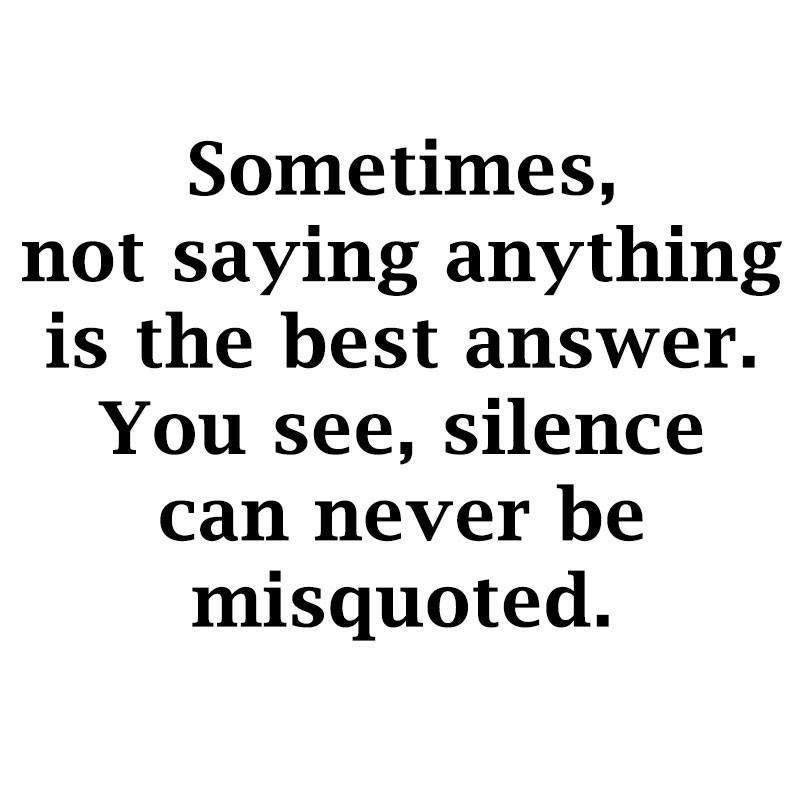
Saying Nothing

I’ve spent a great deal of my career managing crisis communications. And this is an important lesson we all should be mindful.

In the education sector, we just have too many people who are speaking just for the sake of speaking. We should speak when we have something to contribute. Silence should be treasured, and see as a form of endorsement.

Ah, to dream …

IMG_1050.JPG

Help a Trojan Out!

For those of us who live social media, we hopefully find a lot of use from the #edchat hashtag. Whether you participate in the official weekly #edchat discussions or just use the tag to throw out ideas that others might find interesting or provocative, it is a useful tag for taking the pulse of what is happening in education.

Well, the good folks over at the University of South California’s Rossier School of Education are doing a little survey to better understand how #edchat is being used and how it might be improved, particularly so it is of more use to classroom educators. So now is the time to have your voice heard on the matter.

Five minutes of your time Just go visit the USC Rossier #edchat survey. Help improve the Twitter space.

If surveys aren’t your thing, you can always check out the Essential #Edchat Resource Guide that those well-meaning Rossier folks (and Rossier MAT Online) have made available.  

And for all you non-Trojans out there, I assure you it is not an endorsement of their football team (unless you want it to be). I offered my opinions, yet will still be rooting for the University of Virginia (and, to a lesser degree Notre Dame) as college kickoff comes …

Wahoowah!


Public Engagement vs PR

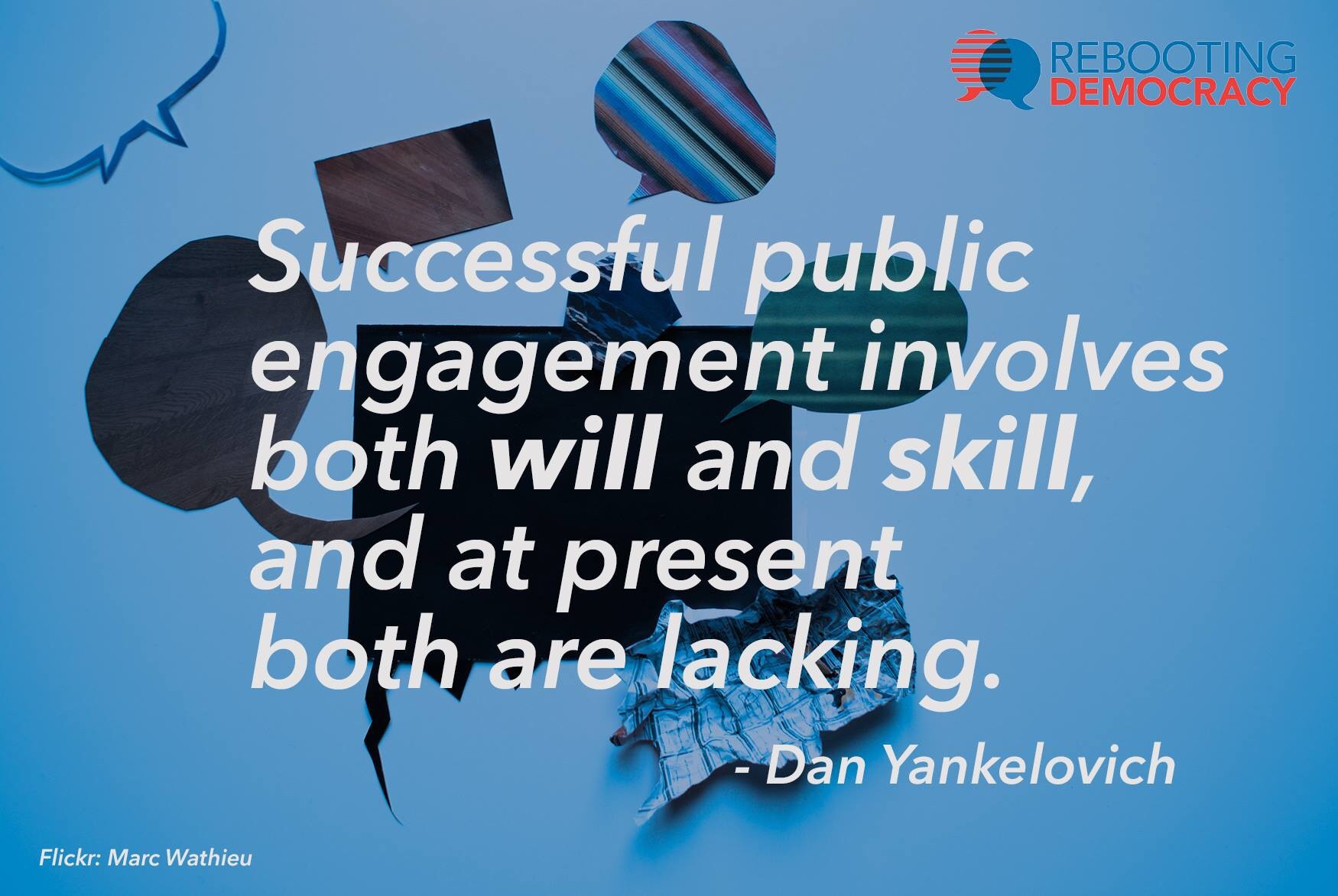
Those who know Eduflack in a professional setting know I am a firm believer in public engagement. This moves beyond the typical PR to an approach where we first inform then build support, then mobilize those supporters for action.

The framework that I have long preached is one that was taught to me by a dear friend and mentor years and years ago. It is the public engagement model developed by Dan Yankelovich and Public Agenda. I can’t count have many times I have deployed the model, and how it always worked when implemented with fidelity.

So when I saw the below meme, I just had to share. The lesson from Yankelovich is an important one, particularly as we look at the future of education reform and where school improvement efforts may head.

IMG_1051.JPG

Is Education a “Top” U.S. Issue?

Today, Gallup came out with its latest public opinion poll on the top problems in the United States. It should come as no surprise that dissatisfaction with government was at the top of the list. Whether frustrated with a do-nothing Congress, an overreaching president, or general frustration with Big Brother telling us what to do, Americans speak loud and clear that they are frustrated with government. (Of course, they are coming at it from all sides, so there is no clear fix.)

Immigration is a close second, with the economy coming in third. All of the issues we would expect to see at the top of the list for our citizenry’s general frustration.

So where is education on the list? Surely with all of the national fights over testing and Common Core and teacher tenure and everything else that is keeping edu-minded Americans up at night, concerns about our educational systems must be right up there, right?

Uh, not quite. Education comes in with a thud at number nine. It follows poverty and comes in just above the national debt. Where 18 percent of Americans say government is our top concern, and 15 percent say it is immigration, a whopping 4 percent say it is education. And that is now down a percentage point (or 20%) from last month.

Should this surprise us? No. For decades now, we’ve long realized that education is not a ballot box issue. Sure, we are all concerned about education, but it isn’t an issue that is make/break for us. We care, but not before we care about six or eight other issues first.

What do we do about this? First, we need to recognize that while many of us live in the edu-bubble, the vast majority of Americans do not.

Second, we need to be mindful of how education ties into the topics that are driving concern. Concerns about government? We see that extended in frustrations with everyone from EdSec Arne Duncan to local superintendents and principals. Immigration a concern? Especially as it relates to those kids who are stuck at the border, looking for a better life and opportunity that begins with access to our public schools. Economy a worry? How does that crosswalk with grad rates and STEM and higher education in general?

The short story is that education does not live in its own silo. It permeates each and every topic of discussion and concern that we have. If we treat “education” solely with a neat little k-12 or higher education label, we miss the bigger picture. And we lose the opportunity to draw attention to both the concerns and the solutions.

I yield the soapbox …


“Disruptive Change in Higher Education: Replace or Repair?”

Earlier this summer, Arthur Levine, the president of the Woodrow Wilson National Fellowship Foundation and the former president of Teachers College, wrote for Forbes magazine on disruptive change in higher education.

In the piece, Levine noted that:

In the digital age, higher education, willingly or unwillingly, will undergo disruptive change. Existing institutions can lead the change or become its victim. If higher education resists, new digital institutions will be established to meet the needs of the time.

This observation isn’t a matter of advocacy; rather, it is a conclusion based on the experience of disruptive change in two industries—the silent film industry, transformed by the advent of sound, and the news media, still being reshaped for the digital age. In each case, the major and highest-status companies resisted the change with dramatically different results.

We talk a lot about disruptive innovation in a general sense, but we seem to resist applying it to established institution like our colleges and universities.

But it is an important topic. And it is an issue that Levine seeks to speak on at the SxSWedu 2015 event. His session, Disruptive Change in Higher Education: Replace or Repair?, looks at these very issues, exploring how IHEs can “lead the change or become its victim.”

A fascinating topic. An entertaining and passionate speaker. What more can SxSWedu be looking for? Visit the SXSW PanelPicker now and give a thumbs up to Dr, Levine and a close look at whether we repair or replace or universities to meet 21st century needs and expectations. Give the big ol’ thumbs up right here: http://panelpicker.sxsw.com/vote/37380

(Full disclosure, Eduflack works for the Woodrow Wilson Foundation and with Dr. Levine. But even if he didn’t, he’d still be giving this panel discussion a shout out.)