How About Those Edu-Elections?

If anything, yesterday’s midterm elections were entertaining. We saw incumbents defeated. We saw incumbents previously left for dead winning big. We saw darkhorses win in the end. We races long written off come in within recount range. For those without a vested interest in a specific candidate, it was a heckuva night.

While yesterday’s results will be deconstructed ad naseum in the coming days and weeks, let’s take a look at some of the edu-implications.

The Power of Teachers’ Unions

It was the best of times and worst of times for the teachers’ unions. Teachers were able to start the night by crowing loudly about Tom Wolf’s win for the Pennsylvania governorship, knocking off an incumbent Republican governor who had slashed state education spending and sought to cancel out teacher contracts in Philadelphia. The unions also got to wrap up Election Day wit a big win, as Tom Torlakson was re-elected as state superintendent for public instruction in California, turning back reformer-backed Marshall Tuck. (And we will set aside the fact that the job has very little actual power in California education, with the real strength lying with the state board of education).

But what happened in between will have many people questioning the political power of the teachers’ unions. AFT and NEA put major dollars and major GOTV muscle into taking the governorships in states like Wisconsin, Illinois, Florida, Georgia, and Colorado. All went Republican. Strong union support couldn’t even help true-blue states like Massachusetts and Maryland elect Democratic (presumably pro-union, pro-teacher) governors.

Those Dems that did win the big chairs have some “history” with the teachers’ unions. In Connecticut, Dannel Malloy barely won re-election, and likely owes his win to teachers after just two years seeking to eliminate teacher tenure. In Rhode Island, Dem Gina Raimondo won the race, largely because she took on unions as part of a pension reform push she led.

Put all together, and the unions had limited impact in statewide elections, particularly in those states they targeted.

The Role of Ed Reformers

Yes, the AFT and NEA had a rough night. But it wasn’t all rainbows and lollipops for education reformers either. They lost their biggest prize of the evening when Torlakson beat Tuck in Cali. Reformers only won half the prize they sought with a big spend in the Minneapolis school board race.

Ed reform Dem governors like CT’s Malloy and NY’s Andrew Cuomo only won by seeking to reframe or rewrite their past support for reforms, as Cuomo practically came out as anti-CCSS.

In fact, reformers seemed most proud by Raimondo’s win, believing pension reform is a sure path to more education reform.

While much of the edreform community tends to focus on Democratic reformers, it was a good night for GOP edreformers. NM Gov. Susana Martinez., MA Gov.-elect Charlie Baker, and GA Gov. Nathan Deal to name but a few.

Common Core Impact

When it comes to the political impact of Common Core, support of opposition seemed to be neither help nor hindrance. The Fordham Institute’s Mike Petrilli says that half the Republican governors are pro-Common Core. For those like Ohio’s John Kasich, such support didn’t hurt him at all. School Reform News reported that nine of the 10 GOP govs up for re-elect yesterday were against Common Core. For those like Wisconsin’s Scott Walker or Florida’s Rick Scott, opposition to the Core helped. (Though I have to question School Reform News’ math, as with OH’s Kasich and NM’s Martinez, I already have two of the 10 GOP govs pro-CCSS, without adding voices like NV’s Sandoval and GA’s Deal.)

Those Pesky Statehouses

Over the weekend, John Oliver ranted about how few were paying attention to state legislature elections. And he is absolutely right. For education, that’s where the action will be, from CCSS to testing, from teacher evaluations to school funding. We still need to wait for the dust to settle, but the initial returns seem to show that GOP governors will have more supportive legislatures behind them, while Dem governors will have a few less supporters on their benches. Issue coalitions may very well win the day in state capitals, particularly on issues such as education.

No doubt there is more to come. The one thing we know with certainty? With Sen. Lamar Alexander taking over as chairman of the Senate Education Committee, it is safe to say we have a Senate chairman who, as a former gov, former EdSec and former university president, knows a thing or two about the issue of education.

The State of Indian Schools

Back when my mother made the decision to enter the teaching profession, she did her student teaching at an Indian school in New Mexico. At St. Catherine’s Indian School in Santa Fe County, my mother gained the clinical experience that helped her develop into the exemplary high school English teacher so many of her students know her for.

Why the trip down memory lane? Over the weekend, the Associated Press’ Kimberly Hefling wrote an interesting piece on the current state of the modern-day Indian school.

In the piece, she describes one school in Arizona as such: “The school, which serves 81 students, consists of a cluster of rundown classroom buildings containing asbestos, radon, mice, mold and flimsy outside door locks. The newest building, a large, white monolithic dome that is nearly 20 years old, houses the gym.”

When we talk public education and school needs here in the United States, we often focus on inner-city schools and the challenges they face. It is rare that Indian schools (or rural schools in general) are a central part of the discussion. If you haven’t read Hefling’s article, please do. It is worth the read and paints a too real picture of the work ahead of us.

The True Costs of Education

Since I’ve been involved in education reform issues, I’ve heard a lot about the costs of education. The haves and have nots. Money following the child. Merit pay for teachers and students. What gets sacrificed during lean budget years.

But we still talk to little about the costs when we don’t provide all kids with a great public education or what happens when we allow race, family income, or zip code determine how good a “good” public education really is.

When I saw this from Californians for Safety and Justice, it helps bring it all into perspective. Yes, we need to make sure that tax dollars are spent wisely. But can we really argue about where our priorities should be?

IMG_1241.JPG

Seeking Collaboration Between Reformers, Educators

For too long, we have heard of the battles between the education reform community and educators. From the way these debates have been framed, one would think the two sides couldn’t agree that the sky was blue or that water was wet.

Truth be told, reformers and educators agree on far more than they disagree. and both sides of the school improvement coin are necessary if we are to be successful in efforts to improve student learning and achievement.

Or so Eduflack writes in this week’s Education Week. In a commentary entitled, “It’s Time for Reformers, Educators to Work Together,” I note:

The time has come to turn away from the divisive, us-vs.-them approaches of past policy fights. Instead, we must work together with educators to improve our public schools. We must focus on options and opportunities that can have real impact on all our children, not just a select few. And we must do so in a way that improves teaching and learning for all.

Otherwise, we are merely tinkering around the edges, seeking to set the next boundaries for the next fight. Our kids, our communities, and our nation deserve far better than such rhetorical posturing.

As we start another school year, we can’t afford another year of sniping, motive questioning, and hyperbole. Hopefully, this piece gives all sides something to consider.

A Common Core Branding Problem or Implementation Problem?

With current actions having the governor of Louisiana filing suit against the Federal government over the Common Core State Standards and poll after poll showing new data on public perceptions regarding the standards themselves, the name Common Core, and just about everything else related to CCSS, it is no wonder that we aren’t quite sure what to make of it.

It is only going to get louder, as we get closer to the November elections, as we see candidate campaigning against (and a few for, I suppose) Common Core. Just ask the state superintendent in Arizona about the impact of the CCSS issue.

In today’s Waterbury RepublicanAmerican, Bruno Matarazzo has an interesting piece on how the topic is playing out in a true-blue state like Connecticut, a state that, back in the 1990s, was once a beacon for high educational standards. There, the issue is playing out through an Independent candidate for governor and growing concerns about the linkages between the standards and how new assessments will be used in high-stakes ways, such as teacher eval.

As Connecticut is a former stomping ground for dear ol’ Eduflack, I offered a little perspective to Matarazzo for his piece. Important for Connecticut, but also relevant for dozens of other states grappling with Common Core implementation issues. As Matarazzo writes:

PATRICK RICCARDS, THE FORMER DIRECTOR of Connecticut Coalition for Achievement Now and current director of the Woodrow Wilson National Fellowship Foundation, said Common Core has a branding problem; the standards themselves are not bad. He said supporters of Common Core have done a poor job of demonstrating why a common set of education standards across the country is needed.

Riccards said supporters also forget the emotional impact the topic of education can have on an entire community, from parents to the town gadfly. People don’t want to be made to feel the way they were educated as children was wrong, he said.

“You don’t win that fight with facts and figures, you win that by winning hearts,” Riccards said.

The problem with the state’s rollout is that it wanted to accomplish too much in too little time. Even before Common Core was implemented, a new computerized assessment pilot program was launched and a new teacher evaluation format was introduced.

Riccards said the gold standard in Common Core implementation was Kentucky, which rolled it out over four years and waited until it was complete to begin working on its own assessment test that was tied to the new standards.

Rebranding Common Core and holding town hall meetings to inform the community about the standards won’t help quell the fears of people concerned about the standards, Riccards said. What Connecticut needs to do, he suggested, is focus solely on Common Core implementation and make it sure it’s done right because the state only has one chance.

“If Connecticut screws this up, there’s no going back and doing it over,” Riccards said.

There are no do-overs when it comes to Common Core implementation. In an era of instant gratification, we need to really put the time in with regard to instruction, professional development, curricular materials, and the like before we worry about how the test scores are going to be applied.


Cast Your SxSWedu Votes Now!

It’s that time of year! Only a few more weeks left to have your say in some of the edu-panels that will be on the docket for next year’s SxSWedu event.

As always, there are tons of terrific ideas out there. But not every good idea gets a time slot. They need the backing of the audience as well. So it means you need to go to the SxSW PanelPicker and give a great big thumbs up to those sessions you think are worthy of SxSWedu.

When we go to the ballot box, we usually face a gauntlet of folks handing us sample ballots of those we should vote for. SxSWedu is no different. Take a gander over at Twitter and you can see tons of folks lobbying for their sessions. All can be found at #SxSWedu.

Your cheat sheet is here, though. Three panels worth your consideration and your endorsement:

Disruptive Change in Higher Ed: Replace or Repair?

In the digital age, higher education, willingly or unwillingly, will undergo disruptive change. Existing institutions can lead the change or become its victim. If higher education resists, new digital institutions will be established to meet the needs of the time. Tradition simply cannot save a college or university unwilling to adapt or unable to learn from those who adapted previously. It will explore what disruptive innovation really means for higher education in the 21st century learning.

Forget Leaning In, We Need to Dadprove

Facebook’s Sheryl Sandberg and Pepsi’s Indra Nooyi have preached the merits of “leaning in.” But if we are serious about boosting student achievement and inspiring successful children, we need less leaning in and more fathers who are “diving in” to their families. Instead of encouraging more to prioritize work over family, we need to inspire a generation of men to realize what they can and should do as dads, being active in their children’s lives and involved in their learning process. (Fair warning, this is a presentation by dear ol’ Eduflack)

Tech x Teacher Prep x Disruption = Student Success

In different ways, these panelists are leaders challenging the status quo in education to help teachers and students today and tomorrow. They understand a continued rise in teacher attrition is a huge problem for all, and solutions come in the form of a smart intersection of tools and technology, support, education and mentorship. Successful teachers help us get to student success, and leadership in learning takes on new meaning when this group covers what it will take to get us there and why.

Each one unique. Each one important. Each one worthy of your endorsement. Vote early. Vote often. And make sure you vote for these sessions for SxSWedu 2015!

Public Engagement vs PR

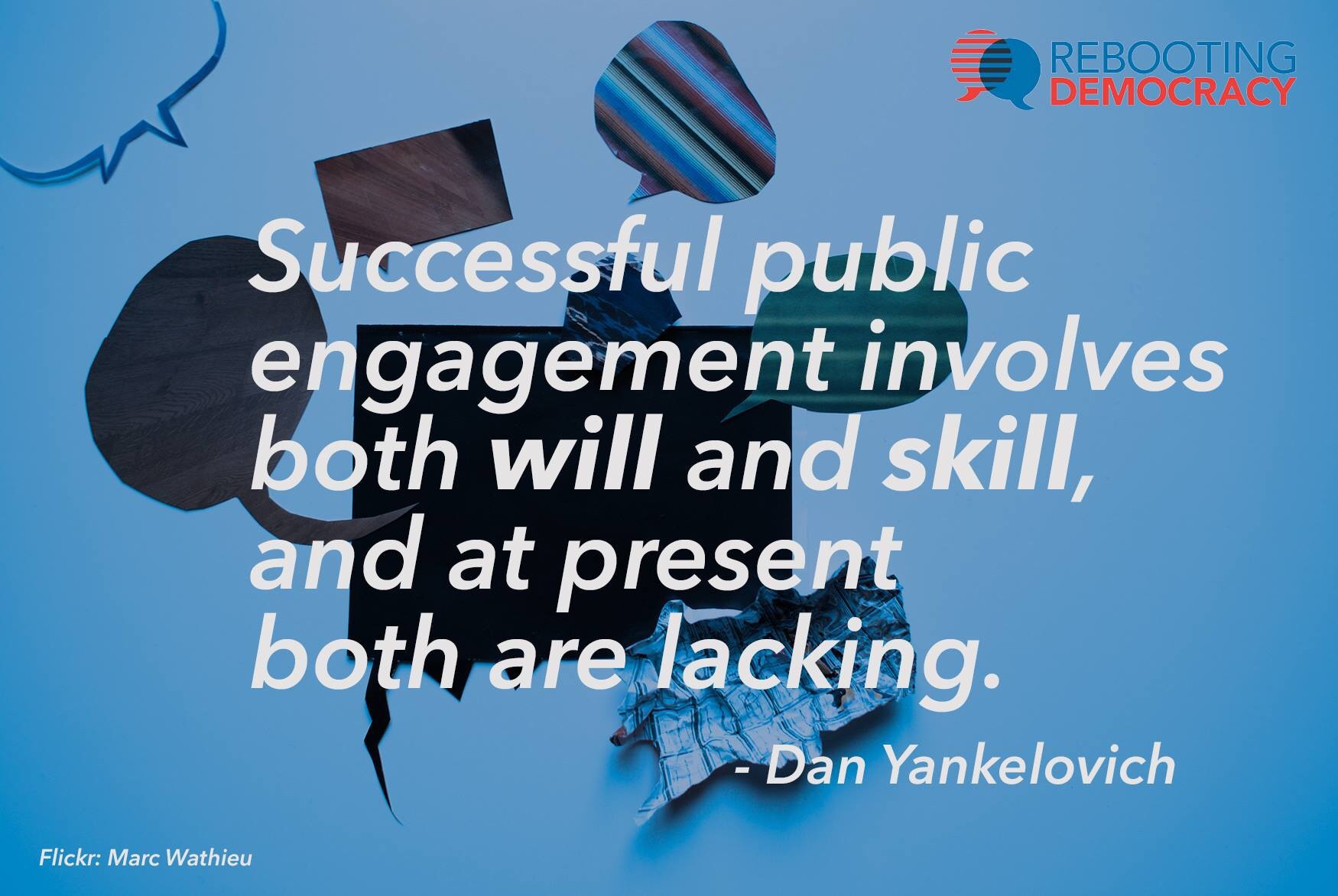
Those who know Eduflack in a professional setting know I am a firm believer in public engagement. This moves beyond the typical PR to an approach where we first inform then build support, then mobilize those supporters for action.

The framework that I have long preached is one that was taught to me by a dear friend and mentor years and years ago. It is the public engagement model developed by Dan Yankelovich and Public Agenda. I can’t count have many times I have deployed the model, and how it always worked when implemented with fidelity.

So when I saw the below meme, I just had to share. The lesson from Yankelovich is an important one, particularly as we look at the future of education reform and where school improvement efforts may head.

IMG_1051.JPG

“Disruptive Change in Higher Education: Replace or Repair?”

Earlier this summer, Arthur Levine, the president of the Woodrow Wilson National Fellowship Foundation and the former president of Teachers College, wrote for Forbes magazine on disruptive change in higher education.

In the piece, Levine noted that:

In the digital age, higher education, willingly or unwillingly, will undergo disruptive change. Existing institutions can lead the change or become its victim. If higher education resists, new digital institutions will be established to meet the needs of the time.

This observation isn’t a matter of advocacy; rather, it is a conclusion based on the experience of disruptive change in two industries—the silent film industry, transformed by the advent of sound, and the news media, still being reshaped for the digital age. In each case, the major and highest-status companies resisted the change with dramatically different results.

We talk a lot about disruptive innovation in a general sense, but we seem to resist applying it to established institution like our colleges and universities.

But it is an important topic. And it is an issue that Levine seeks to speak on at the SxSWedu 2015 event. His session, Disruptive Change in Higher Education: Replace or Repair?, looks at these very issues, exploring how IHEs can “lead the change or become its victim.”

A fascinating topic. An entertaining and passionate speaker. What more can SxSWedu be looking for? Visit the SXSW PanelPicker now and give a thumbs up to Dr, Levine and a close look at whether we repair or replace or universities to meet 21st century needs and expectations. Give the big ol’ thumbs up right here: http://panelpicker.sxsw.com/vote/37380

(Full disclosure, Eduflack works for the Woodrow Wilson Foundation and with Dr. Levine. But even if he didn’t, he’d still be giving this panel discussion a shout out.)