Racism, Empathy, Liberals, and Baseball

As I’ve previously written, I am honored to be part of the Ashoka Foundation’s Changemaker Education effort, serving as an Ashoka Empathy Ambassador. This past week, I wrote over at Medium on a very personal experience from my childhood, where I heard supposedly liberal, open-minded parents demonstrate some textbook closed-mindedness when it came to busing and the impact of bringing kids from the inner city into their suburbs.

As I wrote, reflecting on my experiences as a kid:

I want to be empathetic about it. But I’m not necessarily talking about showing empathy for my friend. I want to better understand what in the world can motivate a supposedly liberal, educated adult male to be so thoughtless, so careless, and so ridiculous with his thinking. I want to know how adults who can preach tolerance and equality, and talk about the need for civil rights, can mean it as long as it doesn’t extend to their own local parks and schools.

I hope you’ll take the time to read the full piece over at Medium here, and to really spend some time with some of the great writing being offered through the entire Ashoka Changemakers effort.

Does Online Ed Lack Integrity? Seriously?

I don’t want to make Eduflack an ed-policy-check blog about the Hillary Clinton campaign. After critiquing the Hillary effort earlier this week, I pledged to myself I was done with presidential campaign edu-politics for a while.

Then Carl Straumsheim, a part of the terrific reporting team over at Inside Higher Education, has to go and discover and then write up what he did today about Hillary’s edu-speech this week and its remarks about online education.

As Straumsheim reported:

In a version of the plan distributed to the media this past weekend, the campaign said, “We must restore integrity to online learning and will not tolerate programs that fall short,” as though online education has recently lost its way. The campaign reworded the sentence before Monday’s announcement, however. The published version reads, “We must bring integrity to online learning” — as though it never had any in the first place.

Unfortunately, the Clinton campaign didn’t respond to IHE’s request for comment to the report. So we are all left guessing by what they intended and why what was written was actually written (and spoken).

I want to give the Clinton campaign the benefit of the doubt. I really do. I want to believe this was just a clumsy attempt to talk about the problems facing for-profit higher education today. It was a way to voice concerns about gainful employment and the collapse of Corinthian Colleges and the hope that a college degree has meaning, regardless of who’s name is on the top of the sheepskin.

But by using the words that she did, and editing them the way that she did, Hillary simply adds fuel to a fire that is already confusing far too many. She is using online education as a synonym for for-profit education. She is confusing instructional delivery method with the administrative mission and responsibility. And she is wrong in doing so.

There are a great number of traditional, not-for-profit colleges and universities that use online education. IHE mentions Hillary’s own alma mater, Wellesley College. We could add Bill’s undergraduate school, Georgetown University, to the list of colleges playing in online ed. And institutions such as Harvard, MIT, Stanford, and even my own University of Virginia make the list.

Surely we aren’t suggesting that these colleges and the hundreds like them that are using online delivery to reach today’s students lack integrity, are we? Does she really mean that every institution that currently offers blended learning or online platforms or even MOOCs lacks integrity? That a program “falls short” simply because it isn’t delivered through a traditional classroom setting, with a single professor talking before a lecture hall of hundreds of desks (many of which may have students sitting in them)?

If she meant to criticize for-profit higher education providers like Corinthian (and many of them do deserve criticism) then just come right out and say it. But remember that a provider like University of Phoenix provides far more “education” through its traditional, bricks-and-mortar storefronts that Hillary seems to embrace than it does through its online offerings. And don’t forget that, until earlier this year, Bill Clinton just wrapped up five years as the “honorary chancellor” of the Laureate International Universities for-profit and online chain (and earned millions of dollars for the honor, according to the NYT.)

Since 2007 or 2008, Eduflack has waxed semi-eloquently on this blog about the value and benefits of online learning. Much of it has been focused on K-12 blended learning efforts, but some of it has also been directed toward higher education. Today’s learners are not like those of a previous generation. Online learning allows all of us to ensure that tech-savvy students don’t need to unplug or de-skill when they enter a classroom. It ensures that a student is not denied an academic path of choice because of geographic limitations. It helps students pursue postsecondary education on their terms, building programs that work with the growing demands of families, work, and life.

Done right, online education empowers the learner. It puts the decision making in the hands of the student, and not just the provider. And it can require an education provider to improve instruction, delivery, content, and overall quality as a result.

Online education has enormous power when it comes to opening doors to those previously denied and leveling the learning playing fields.

Do some providers abuse that power and offer an inferior product? Absolutely. But the same can be said of bricks-and-mortar institutions that will enroll any warm body willing to take out loans to pay rising tuition costs. Our focus should be on the quality of instruction-however it is delivered-and not exclusively on the model being used to deliver it.

Mrs. Clinton, I hope you intend to continue to push on the discussion of integrity and institutional quality in higher education. But please don’t use such a broad brush in the process. Let’s look at grad rates and employment statistics. Let’s look at institutional costs and student loan debt. Let’s even discuss the merits, or lack there of, of for-profit higher education.

But let’s not suggest online education lacks integrity. Education, whether online or delivered in any other method, depends of the quality, values, and character of the person delivering it. Whether they do it in a classroom, online, from the town square, or at the local Dunkin’ Donuts, integrity is a measure of the quality of the product, not the means for delivering it.

Hillaryland, We Have an Edu-Optics Problem

Typically, Eduflack tries to stay away from purely political issues here. Yes, I love to write about the intersection of education policy, politics, and communications. But there has to be a real education slant to it. Even though Eduflack is a former campaign hack and flack, and has worked to elect Democrats (and a few Republicans) to political office, and even though I am a former elected official myself, this isn’t a political platform.

So I’ve largely bitten my tongue (at least on this blog) when it comes to the rookie mistakes and amateur actions that we have seen month after month from Hillary Clinton’s presidential campaign. I’m not going to rehash those here, but with her experience, with the experience of the best political team money can buy, let’s just say I expect much, much better.

But this morning, those problems oozed out into the edu-sphere, so I see it as fair game on Eduflack. As many news outlets are reporting, today Hillary Clinton is announcing a $350 billion college affordability plan. Bloomberg’s account of the plan is here, while The Washington Post’s is here and Politico’s can be found here.

Let me make clear. I don’t have any issue with any efforts to increase the number of college-going (and college-completing) Americans, nor do I oppose efforts to make college more affordable (even if it is by loan, rather than grant). And I don’t even take issue with a plan that, as reported, sound remarkably like the idea that Toby and Josh hatched in a bar on West Wing when they missed the campaign plane in Indiana and got stranded in a local bar and met a dad who didn’t know how he was going to pay for college for his daughter.

No, my real issue is with the optics of today’s announcement. While every major media outlet has already reported on the Clinton affordability plan, the official announcement will be made today in New Hampshire. In Exeter, New Hampshire.

For those unfamiliar, Exeter is the hometown of the Phillips Exeter Academy, one of the most elite private high schools in the nation. The uber-wealthy who send their children to this private high school pay, according to the school’s website, $46,905 a year in tuition, room, and board. They also have to pony up $180 for linen service, $365 for a student health and wellness fee, and $340 for a technology fee. For an optional $2,060, families can also buy a student accident/sickness insurance plan (for when, I’m assuming, the student health fee and mommy and daddy’s corporate insurance just won’t do).

While this may cause some sticker shock for many of us parents, don’t fret. Phillips Exeter boasts that it is able to provide financial aid to those families who suffer by earning less than $400,000 a year. (No, that isn’t a typo, that’s $400k, not $40k.)

Let that sink in for a moment. We are off to talk about the struggles of middle class parents paying for college in a town where the private high school costs more than most middle class parents’ take-home income for the entire year. We are preaching “affordability” in a community where those earning just under a half-million-dollars a year are considered needy and demanding of financial aid.

The sunny-eyed optimist in me would like to believe that Hillary is going to Exeter to proclaim that every student, even those who attend the elitist Phillips Exeter Academy, should have the opportunity and ability to attend the college of their choice. But the steely-eyed realist knows Exeter was chosen because it was in New Hampshire, with no real symbolism at all.

I hate to break it to those making campaign decisions these days, but the average American family doesn’t quite relate to a private school that charges upwards of $50,000 a year FOR HIGH SCHOOL. They bristle when one suggests $400,000 a year in income qualifies for financial aid.

Hillary’s advisors may see today as the declaration of a “mandate to act on college affordability,” as they told Politico. But for far too many families who currently don’t qualify for grants and yet can’t afford college for their kids next year, they will see it as just another example of the millionaire class just not getting it. Particularly when Hillary’s standard $275,000 speaking fee was more than adequate, with just one speech, to pay for daughter Chelsea’s four years at Stanford University.

Face. Palm. Repeat.

UPDATE: For those who want to give Hillary the benefit of the doubt, and have asked some questions, I’ll offer up a little more data. The grand unveiling of the plan will be at Exeter High School. As for the town of Exeter, New Hampshire itself. I’m sure it is lovely. It has a little more than 14,000 residents, more than 95 percent of whom are white. Two percent of the population is Asian-American. A little more than half a percent of the population is African-American. Latinos don’t even register. And the median family income falls just short of $100,000 per year. Ain’t that America?

The Importance of Smart Parents

Earlier this year, I shared a post I had written for Huffington Post, as part of Getting Smart’s Smart Parent series. In it, I wrote about the importance of fathers being actively involved in their kids’ lives. That included their academic/school lives. From my perspective (and I can only write about what I’ve experienced with my own two kids), technology can’t replace an involved parent. But an involved parent can dramatically increase the impact of ed tech, particularly as it relates to student learning.

At the time, I wrote:

But the real power of the technology comes from understanding what is happening in class, from seeing my kids’ strengths and knowing how to supplement what is happening. It comes from seeing where they struggle and embracing where they soar. Such determinations can’t be made from a report card or an email from the teacher or a quick review of the evening’s homework. They require hands-on knowledge that comes from being in the classroom, watching the learning process.

That essay, along with a great number of other pieces Getting Smart inspired for its Smart Parents series, is now part of a new book coming out soon. The book is available for pre-order now, and you can learn more about it here.

Big thanks to Getting Smart, Huffington Post, and the Nellie Mae Education Foundation for making this book happen and for advocating for such an important (and often neglected) topic–the role of parents in the educational development of children.

When asked why this book and project was so important, I told Tom Vander Ark and company:

There is nothing more powerful than an engaged, informed parent. Smart Parents: Parenting for Powerful Learning provides all families – regardless of race, socioeconomic status, or zip code — the tools and resources they need to be effective advocates and inspiring teachers for their kids. Successful learners need smart parents supporting and encouraging them.

And I meant every word. Parents, pre-order, receive, and then read the book. I promise you won’t be disappointed.

Learning Through Student Journalism

I will often say that the most defining part of my collegiate experience was the time I spent in the basement of Newcomb Hall at the University of Virginia. That space served as the home for The Cavalier Daily, U.Va.’s independent student newspaper.

The CD has been the newspaper of record at Mr. Jefferson’s University for 125 years now. It has won countless awards and broken story after story. During my tenure there, we actually had major national newspapers trying to convince our printer to read them our front pages, as we had broken a major story regarding the Honor system and a big-dollar-donor parent trying to keep his son from being expelled. They didn’t want to be scooped by a bunch of kids.

During my time at The Cavalier Daily, I held many positions. I started off as an opinion columnist. Over time, I was a sports writer, a sports columnist, a copy editor, the founder of the nation’s first collegiate business section (serving as Marketplace editor), and then as managing editor of the newspaper.

Like me, those who work for The CD do it for the love of journalism. Reporters and editors don’t get paid. They don’t earn college credit (as Virginia doesn’t have a J- school). After being elected managing editor for the 1994-95 year, I worked on average of 80 hours a week down in that basement. Five days a week, we put out an (on average) 16-page newspaper. We had nearly 150 individuals on staff, managing an annual budget of nearly $500,000, all coming from advertising revenue.

At The Cavalier Daily, I learned to write. I learned to think critically. I learned both to work as a team and lead. I learned to appreciate deadlines (as missing deadline cost us money at the printer). And I learned a sense of pride in hard work, in the truth, and in the right thing.

I learned to embrace the words of Thomas Jefferson, found on the masthead the topped my work each and every day. “For here we are not afraid to follow truth wherever it may lead, nor to tolerate any error so long as reason is left free to combat it.”

In recent years, my beloved Cavalier Daily, like so many journalistic institutions, has struggled in the transition into a digital news economy. When I was on the managing board, back in 1994, we actually launched the first web version of the daily newspaper. We were among the pioneers in collegiate journalism.

A few years back, another CD managing board made the bold decision to move from a printed newspaper every morning to a digital one. Instead of using the web to accompany a broadsheet, online and email would lead the day. And again, like others in journalism, The Cavalier Daily realized it was much harder to generate advertising revenue without a print product. And with no financial support from the University of Virginia and a shrinking bank account, the CD fell behind in its rent to the University.

After a time, The Cavalier Daily righted the ship and has been regularly paying its rent to the landlords at U.Va. But it still had $50,000 or so in unpaid rent it needed to make up. The multi-billion-dollar University of Virginia wanted its money. It threatened to evict The Cavalier Daily from its space. So generations of CD alumni acted, and acted swiftly.

The Washington Post tells the story of how those CD alums came together in a matter of hours to pay the rent bill. And Susan Svrluga tells it quite well. And I thank her and WaPo for telling this important story of how a “storied student newspaper” has been rescued (even though WaPo was one of those newspapers, 20 years ago, wanting a sneak peek of what would be on our front pages that winter.)

Yes, the tale of The CD’s rent woes could speak to the financial challenges of print journalism in a digital world. It could speak to the challenges of a fiercely independent student newspaper in an era when universities want to control any and all messaging about them. Or it could speak of the incredible impact organizations and institutions like The Cavalier Daily have on generations of individuals.

The Cavalier Daily saved me when I was at U.Va. As a first year (U.Va. version of a freshman), I was completely lost. I was miserable being in Charlottesville and terribly homesick. I missed my high school days and I didn’t know how to replicate that experience at Mr. Jefferson’s University. My mother pleaded with me to visit the newspaper’s offices. I didn’t want to, but I listened to my mother. And I’m glad I did.

My college experience was The Cavalier Daily. I majored in The CD. It gave me purpose. It helped me get my first job out of college. It is where I made life-long friends. It gave my college days meaning (even if it meant skipping the majority of my actually college classes during my four years at U.Va. – seriously).

Today, I am proud to serve on the board of the Cavalier Daily Alumni Association. And I am even prouder of all of those alumni who stepped forward in recent days to save the CD’s space. Sure, the newspaper could have moved offices. But for the past 20 years, the basement of Newcomb Hall has been The CD’s home. No one wants to be forced out of their home. Particularly when their central mission is training generations of college students to follow truth wherever it may lead.

Kiddos Craving Social Media Love?

Over on my Dadprovement blog, I wrote about an important piece that Parents magazine recently came out with, reposting here, as it is just as important a discussion in education circles as it is in parenting circles:

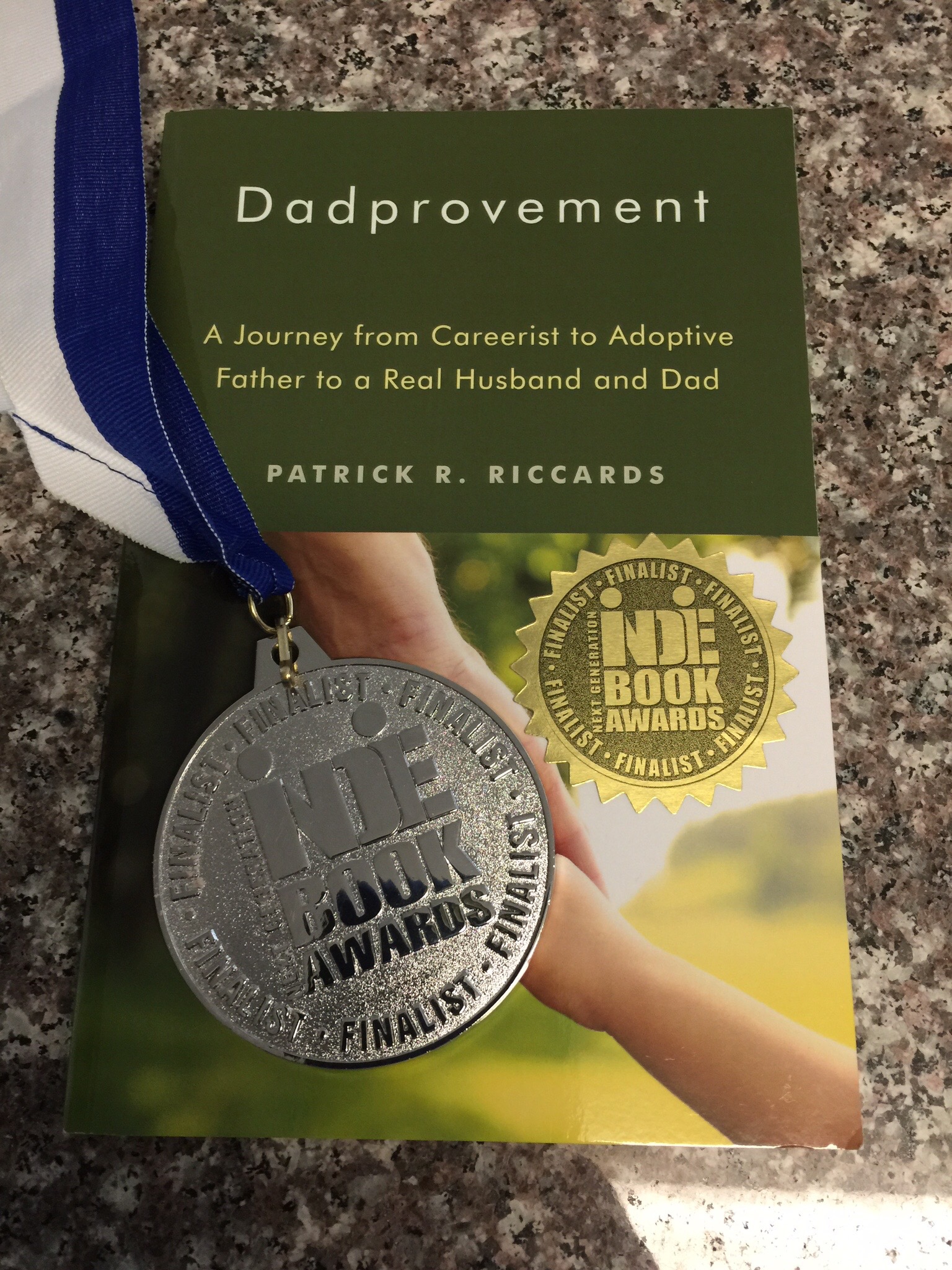
In my book, Dadprovement, I wrote some about how frustrating it can be to see friends leading these “perfect” family lives on Facebook, complete with perfect kids, perfect family outings, and just, well, general perfection. We all know it is just a facade, but for many parents slogging it out each and every day, it can get really frustrating.

So I was glad to see Parents magazine do a story this week on how social media can affect parenting. Parenting in a Fakebook World: How Social Media Is Affecting Your Parenting is definitely worth the read.

Many thanks to Mackenzie Dawson and the good folks over at Parents for including me in the story. I’m sure I’m not the only dad or mom out there who has a little one who craves the social media spotlight.

Because #STEM Matters

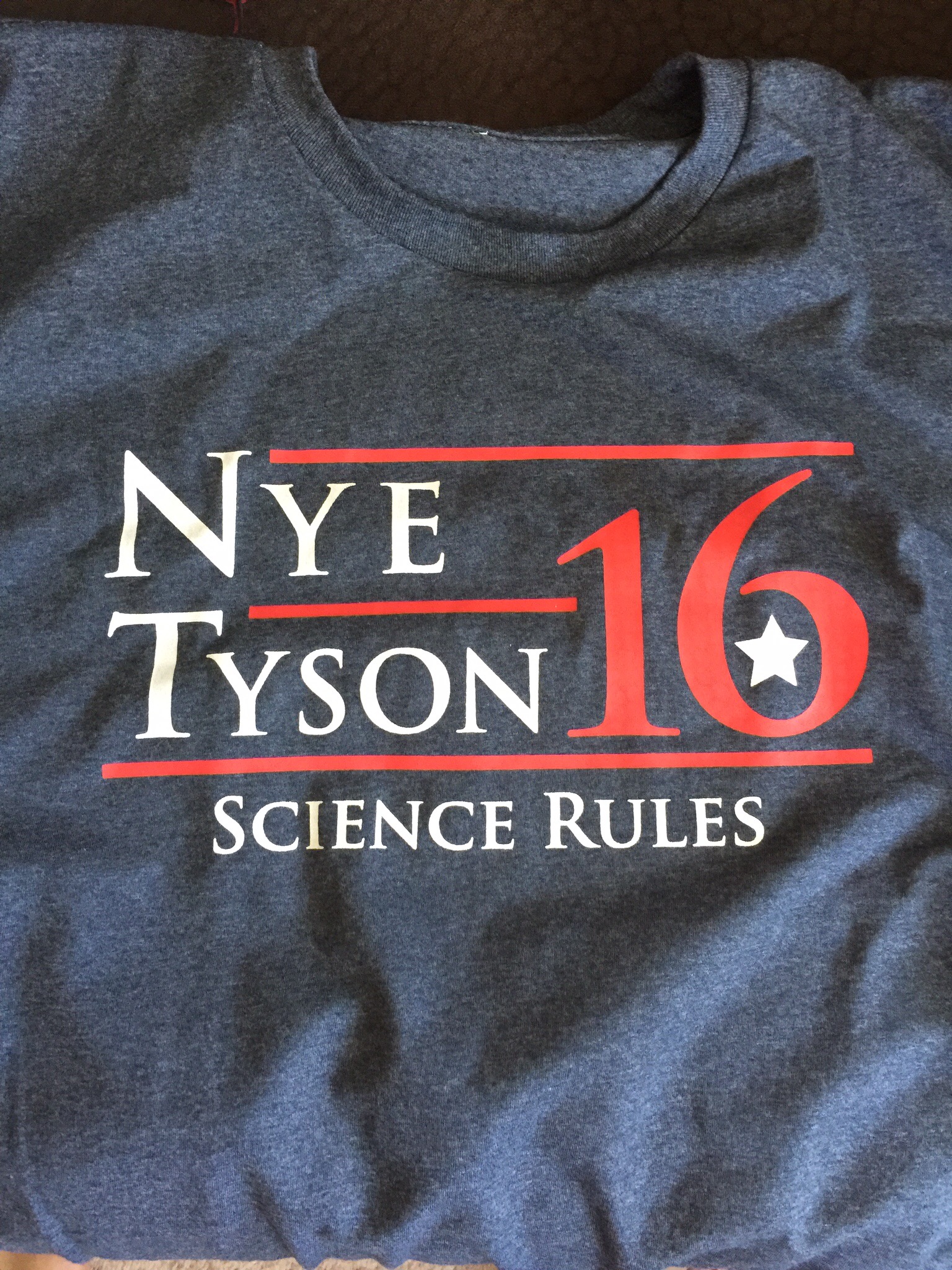
I wore this shirt over the weekend, while I was out running errands. Got lots of confused looks. None seemed to really appreciate it. One asked if Mike Tyson was really running for president. 

Was it too soon? Should I have waited until after we got photos back from Pluto?


It’s What We Teach Our Kids, Not What We Learned As Kids That Truly Matters

As a nation, we seem collectively focused on our differences. Black or white. Male or female. Red or blue. Naturally born or immigrant. Wealth or lack thereof. We are defined by our differences, and relish pointing out how others lack the homogeneity we seem to think we all seek.

Over at Medium, Eduflack writes this week on the horrific actions at Emanuel AME Church in South Carolina last month, and what that experience should teach us as parents and as a community. I’m honored to be a contributor to Changemaker Education, a new series from Ashoka’s Start Empathy Initiative.

In one of the more personal pieces I’ve written in quite a while, I talk about my own experiences, as a white Catholic, at AME churches, and my hopes for my own children, both of Latino descent. As I write:

As children of color, my son and daughter will have a very different life experience than I have had. They will know just as much of the world in which I was raised as they do of the world from which they were adopted. It may be tough for them to be raised with roots in both communities, but it will define who they are as adults and how they raise their own children.

Ultimately, it is my hope that 20 years from now, one of them will be in the well of an AME church, speaking out on the importance of community and equity. It is my hope that they will speak of how far we have come in two decades to tear down the walls and silos of difference in pursuit of identifying the similarities that define us. And it is my hope that they will mean each and every word they speak.

Please give it a read. And please check out what Ashoka is doing on this important topic.