Think Education is a 2016 Campaign Issue? Think Again.

Every election season, the same debate seems to happen in edu-circles. We discuss how important education issues are in this particular election. Such talk often will refer to a recent Gallup poll that places education fifth or eighth on the list of things people most care about. We mention the role of unions, particularly teachers unions, in turning out the vote. And we convince ourselves that education policy will matter this election year.

Earlier today, EdWeek’s Andrew Ujifusa provided a nice dive into what the Democrats’ education platform looks like, while last week his partner Alyson Klein reported on Donald Trump’s eduspeak at the GOP convention. We even have multiple edu-bloggers writing in recent days on the WikilLeaks DNC email dump and DNC staff referring to Common Core as the “third rail” this political season.

A lot of words, yes, but how does this translate to the average voter and the average campaign issue? To be fair, I don’t expect national campaigns to be running on campaign issues. I’d be shocked if Trump even mentions education again over the next three-plus months, other than have some of his surrogates mention Common Core and federal takeovers of our schools (and maybe bathrooms) as red meat for the base.

And while I don’t believe the key to Hillary Clinton picking up enough undecided voters to secure a plurality of voters come November is going to be edu-speak, I do expect education to be part of the discussion for the future. I believe a strong society and a strong future depends on a strong educational infrastructure. Whether that is managing student loan debt, improving access to postsecondary options including career and technical education, enhancing early childhood opportunities, and, yes, raising student test scores. Education is a key strand in the DNA of what so many are seeking when it comes to their futures.

So I was quire surprised when I received an email from the Hillary Clinton campaign this morning, asking me to fill out a survey to share what issues matter most to me and my family. I was asked the issue that mattered most to me, and was provided 14 choices (plus an other box). As you’ll see in this photo, choices included everything from gun violence prevention to criminal justice reform to climate change to Wall Street reform to disability rights. But no education.

IMG_2613

When I checked “other,” I didn’t get a free-fill box to write in my choice. So what “other” means to be will never be revealed to those tabulating what is most important to my family.

And when asked what the second-important issue was to my family, I got the same list.

I can only hope that those compiling the results from this survey (and from similar surveys being done by Team Trump) recognize that education is the non-negotiable in all of these. Looking at the 14 options provided, Eduflack can’t see how any of these issues cannot be fully addressed without improving the P-20 educational systems available to our families.

But I’ve also done enough political campaigns to know that subtlety and nuance are not things found to be effective in such efforts. When lists like these are provided to the average voter, we internalize that these are the issues most important to the American people. And we subconsciously acknowledge that education just isn’t on our list of the top 14 issues the country is facing.

And that’s a cryin’ shame.


Many, Many Thanks

I am incredibly fortunate to do work that I really enjoy. Those who have heard my story know that I fell into strategic communications by accident. I went to college thinking I would become a lawyer. Early in my postsecondary experience, I thought I’d instead be a college professor (but my college professor and college president of a father greatly discouraged it).

An internship on Capitol Hill led to my experiencing what a press secretary does. The rest is history. I never acted on the acceptance letters to law school, instead choosing to go back to Capitol Hill. I’ve spent most of the past 20 years working with not-for-profit organizations and government agencies on public engagement. Much of that time was spent in the education space.

Why this walk down memory lane? Today, PR News named me is Non-Profit/Association PR Professional of the Year. I’m incredibly moved by the award, and for being part of an impressive list of honorees who show, day in and day out, the impact meaningful communications can have on changing policy and public behavior.

I’m doubly fortunate to earn this recognition for my work with the Woodrow Wilson Foundation, as we work to reinvent how higher education in general, and teacher preparation specifically, is addressed in the United States. Change can be hard. But I am incredibly lucky to be working as part of such a terrific team, all superstars in their own right.

I get that many folks don’t understand what I actually do for a living. If you ask my kids, they will tell you “daddy talks for a living.” Some hear my job title and think I’m “just a publicist.” In actuality, I am fortunate enough to work at the intersection of education research, policy, practice, politics, and communications. Each day, I get to figure out how those five pieces fit together in a way that improves teaching and learning for both the educator and the child. And I’m grateful for each of those days.

So thank you to PR News for this wonderful honor. Thank you to those who somehow determined I was the top non-profit communicator in the nation for the past calendar year. And thank you to all of those people who work in education communications, those who inspire me, who advise me, who encourage me, and who remind me why we do what we do.


“Determination and Savvy”

Shameless self-promotion alert. Over at Bulldog Reporter, they have a terrific article (at least the edu-mom and edu-daughter would say it is terrific) about my ongoing work at the Woodrow Wilson Foundation and Bulldog Reporter recently recognizing our communications efforts at Woodrow Wilson on the issue of teacher education.

To be honest, and many won’t believe this, but such write-ups make me uncomfortable (though i’ll admit, I don’t mind being seen as determined and savvy, certainly better than the alternative). It often doesn’t reflect the full team effort that goes into play, and it can too often make the story about the individual, and not the work itself. But I do like how they boiled down some of my blather to a few key lessons for those in the communications sector:

“First, the most successful messaging focuses on the positive and meaningful change,” he says. “Negativity and attacks may sell, but they have a short shelf life. Second, nothing is more powerful than personalizing the story and showing how scary change impacts the individual. Third, don’t be afraid to fail. Particularly when you are starting with a blank canvas, try it all, quickly jettison what isn’t working, and focus on what is most successful.”

When I say it, can I then add a “well said?”

Communicating in the Garden State

It has been a few weeks, and I’ve thus been negligent in sending major thanks to the good folks over at the Public Relations Society of America – New Jersey. Earlier this month, PRSA-NJ named me its communicator of the year. 

It is great to be back home in New Jersey, making a real difference to improve educational opportunities. It is great to be recognized for all of the terrific communications work we are now doing at the Woodrow Wilson Foundation. And it is even greater to be recognized by my peers at PRSA-NJ for this work. 

Thanks to all who made it possible. I have a lot to live up to, but I look forward to the opportunity. 


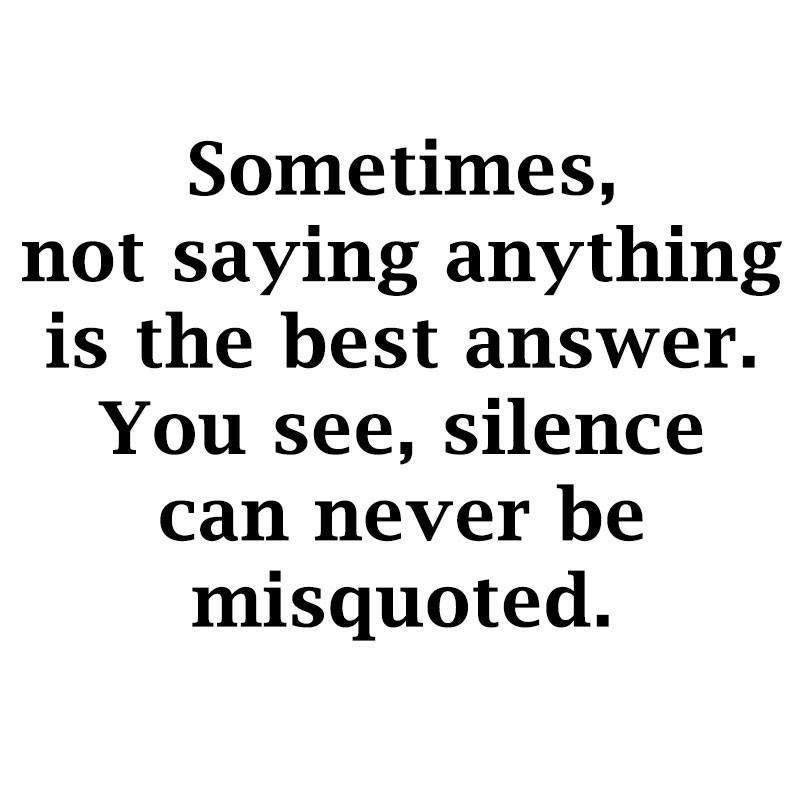
Saying Nothing

I’ve spent a great deal of my career managing crisis communications. And this is an important lesson we all should be mindful.

In the education sector, we just have too many people who are speaking just for the sake of speaking. We should speak when we have something to contribute. Silence should be treasured, and see as a form of endorsement.

Ah, to dream …

IMG_1050.JPG

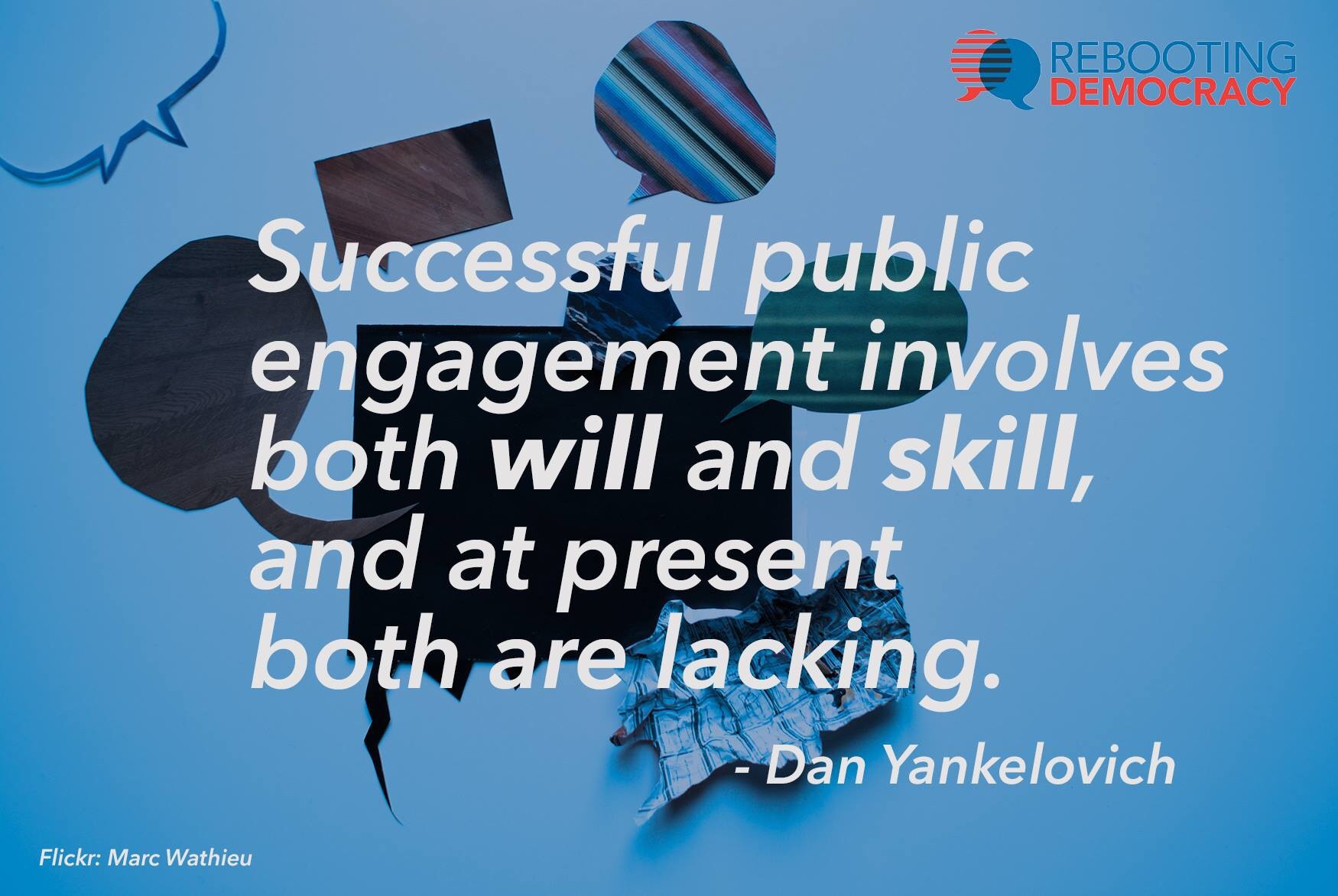
Public Engagement vs PR

Those who know Eduflack in a professional setting know I am a firm believer in public engagement. This moves beyond the typical PR to an approach where we first inform then build support, then mobilize those supporters for action.

The framework that I have long preached is one that was taught to me by a dear friend and mentor years and years ago. It is the public engagement model developed by Dan Yankelovich and Public Agenda. I can’t count have many times I have deployed the model, and how it always worked when implemented with fidelity.

So when I saw the below meme, I just had to share. The lesson from Yankelovich is an important one, particularly as we look at the future of education reform and where school improvement efforts may head.

IMG_1051.JPG

The Ineffectiveness of Spokes-Celebrities

If you’ve been in education advocacy or public engagement long enough, odds are you’ve had this conversation many times.

The discussion starts off with a question. How do we get (parents, teachers, leaders, anyone) to notice what we are doing? How do we really change minds?

Then someone offers up this “golden” solution. We need a celebrity to speak on our behalf. Like Bill Cosby. Or Oprah. Or … who’s that person?

And you venture down that rabbit hole to discuss those spokes-celebrities who could take on your cause. Someone respected. Someone known. Someone you don’t need to worry about being on TMZ in a month. And you usually someone somebody else knows through a friend of a college friend.

If you are lucky, the conversation ends there. If not, you spend weeks trying to get in touch with agents or friends of friends or their accountant’s college roommate’s cousin. Soon, you are back to the drawing board. No spokes-celebrity and just an advocacy effort that must rise or fall on its merits, on the strength of its evidence, and on your ability to convince folks its the right thing to do.

Why is this important? Last week, the Belfast Telegraph ran an article telling us the truth we choose to ignore. Celebrities are not effective in truly representinf non-profits and rallying the public to a cause.

This should really come as no surprise. When the special education movement had its most significant impact, it was because of grassroots efforts, not celebrities. You didn’t see movie stars touting NCLB, and you certainly don’t see pop stars or pseudo-celebs changing any minds when it comes to Common Core, either for or against.

And even while Campbell Brown is raising hackles over teacher tenure or Eduflack’s often cited doppelgänger Louis CK is harping on tests, they aren’t increasing public awareness or converting the unconverted. No, they are preaching to choirs and inspiring the opposition.

So before you go down the spokes-celebrity path, take the time and money and invest in some quality research. Or a solid public engagement campaign. Or a way to better translate complex education data to busy parents. Or even a way to get parents better involved, in a positive way, in their kids’ educations.

Unless you happen to be offering Katy Perry or Salma Hayek or or Gabriele Union or Tina Fey as your spokes-celebrity. Then I’m all for it, and Eduflack will be right there to help you out.

“The Power of Introverts”

My name is Eduflack, and I am an introvert. While I am a highly functioning introvert, one who overcomes when need be, I can never shake being an introvert. I even come complete with a horrible stutter, another item I have overcome, but which often comes back when I get particularly worked up.

While I tend to read a great deal of things, I rarely write about them here. Instead, I focus on education politics and policy and communication. But after recently completing Susan Cain’s “Quiet: The Power of Introverts in a World That Can’t Stop Talking,” I feel compelled to write a little.
Those who are not true introverts will never understand the real fear that comes from having to make small talk in an overpopulated room or having to be “on” for a dinner party. Just ask the eduwife, a classic extravert who has had to live with Eduflack for the past 15 years.
“Quiet” captures quite well the introvert experience. And it offers some keen observations for what it is like to be introverted and how best to deal with those of us in the club.
Among Cain’s more compelling nods:
  • Introverts often need solitude in order to be truly productive
  • Forced collaboration, even in the name of teamwork, is rarely valuable
  • Some of the best ideas come while working solo, not in those group brainstorms that folks are often so fond of
  • Some of the most dynamic, entertaining speakers and public engagers are introverts, who “act the part” to do what they care about
  • Having to speak before a crowd of hundreds is far easier than having to make small talk with a half dozen people at a cocktail party
  • Introversion is largely a matter of nature, not nurture
  • Introverts are more sure of themselves, even in the face of groupthink
  • Introverts typically only speak when they have reason to contribute. They don’t talk for talking’s sake.
Equally interesting was Cain’s remark that while introverts appreciate their alone time, they are prone to share far more about themselves via social media than their extroverted friends. 
What does all of this have to do with this blog? Not much, to be honest. But if offers some interesting food for thought as we start the summer months. 

Social Media in the Education Space

Eduflack is often fond of saying that the education community is typically one of the last to truly embrace new technologies. We lagged healthcare and other spaces when it came to moving onto the Internet and using websites to improve information sharing. We were slow to platforms like Facebook and LinkedIn, and some could say we still struggle with maximizing the reach and opportunity they afford, at least compared to other spaces.

Twitter seems to be a different story. In recent years (and recent months), we have witnessed the enormous education-focused power of Twitter. To get information out to teachers and school leaders and parents. To engage in conversations with individuals and organizations we might not regularly get to spend time with. To spotlight issues and concerns that may not receive the attention of the mainstream media. To raise awareness, understanding, and action on the key policy, research, and instructional issues of the day.
Connected Educators, an effort started by the U.S. Department of Education a few years ago, is the perfect example of the possibility. ESchool News named it one of the top 10 ed-tech stories of 2013. During Connected Educators Month (October 2013), there were more than 600 events and activities, with participation from more than 330 national, state, and local organizations. More than 13 million educators and others were reached via Twitter alone, generating an average of 4.6 million impressions a day. The numbers are more than impressive, but it is aksi a great example of the power of Twitter in advancing important issues, particularly with educators.
The education social media community is a great space to play in. Every summer, Education Next publishes its list of the Top Twitter Feeds in Education Policy. Eduflack is always in awe of the folks of this list, and is appreciative that he has been included on it each year. The wide range of voices, experiences, and perspectives one finds on this annual list (and on so many education-focused feeds that aren’t on the list), are just incredible. And some days it almost feels like a family (even if it is a family where you can’t stand that uncle across the country).
Why all the kudos for the education social media space? Next month, PR News magazine is recognizing its inaugural class of “Social Media MVPs,” an honor that will be awarded at its Social Media Icon Awards event in New York City. Eduflack is deeply humbled that he has been included on this list. And with all of the terrific SM voices in the education space, it seems I am the only education-focused voice on the list. I could start a long list of those who are far more worthy.
In announcing the list this morning, PR News noted, “The Social Media MVPs represent the innovators and trendsetters on social media. These professionals were nominated by colleagues and carefully selected by PR News to be part of this esteemed list.”
Now I don’t know about all that. But I do know that on the SM playground, I am so appreciative of all of the reporters and researchers and educators and others who develop the articles and reports and events on which I am so fond of focusing. And I owe big thanks to the 15,500 followers on the @Eduflack Twitter feed, particularly those who like to engage and have a little back and forth with me and to my colleagues at Collaborative Communications, who let me play in this fun space and give me so many great thoughts on issues and ideas to share on SM.
The 2014 class of Social Media MVPs is an impressive one, including:
  • David Armano, Edelman Digital
  • Danielle Brigida, National Wildlife Federation
  • LaSandra Brill, Symantec
  • Amelia Burke-Garcia, Westat
  • Erica Campbell Byrum, For Rent Media Solutions and Homes.com
  • Kevin Dando, PBS
  • Jim Delaney, Activate Sports & Entertainment
  • Scott DeYager, Toyota Motor Sales USA
  • Frank Eliason, Citibank
  • Sam Ford, Peppercomm
  • Joy Hays, AT&T
  • Brett Holland, Pepco Holdings, Inc.
  • Bob Jacobs, NASA
  • Leanne Jakubowski, Walt Disney World Resort
  • Evan Kraus, APCO Worldwide
  • Stacy Martinet, Mashable
  • Christi McNeill, Patron Spirits Company
  • Kristin Montalbano, National Geographic Channel
  • Christopher S. Penn, SHIFT Communications
  • Patrick R. Riccards, Collaborative Communications
  • Jennifer Stalzer, MasterCard
  • Lt. Stephanie M. Young, United States Coast Guard
  • Albe Zakes, TerraCycle
Kudos to all of those on the list. Social media is one of those things that you either love or you don’t. And from following many on this list, these are folks who truly love SM and the engagement that comes from it.