Rising to the Teacher Challenge in Georgia

When we talk about the teacher pipeline, we often hear folks voicing their frustrations about how the old teacher education pathways just aren’t sufficient when it comes to getting truly excellent teachers into high-need schools. This is particularly true when we talk about placing math and science teachers in historically disadvantaged schools.

Seven years ago, the Woodrow Wilson National Fellowship Foundation (a place I like to call home) launched an effort redesign teacher preparation to meet the needs of 21st century schools. The Woodrow Wilson Teaching Fellowship program now “recruits and prepares the nation’s best and brightest recent graduates and career changers with STEM backgrounds to teach in middle and high school science and math classrooms. It also works with university partners to change the way these top teacher candidates are prepared, focusing on an intensive full-year experience in local classrooms and rigorous academic work.”

The program is operating in five states — Georgia, Indiana, Michigan, New Jersey, and Ohio. In places like Indiana, Woodrow Wilson is finding that its Teaching Fellows are exceeding expectations, with student achievement in measured math and science classes led by Teaching Fellows exceeding performance in peer classrooms.

Interesting what makes the program tick and how it does what it does?  You are in luck. Woodrow Wilson President Arthur Levine and EVP/CEO Stephanie Hull are hosting a Shindig discussion this week to talk about the Georgia program and ow the Woodrow Wilson model is getting the job done when it comes to preparing excellent STEM teachers for high-need schools.  

The discussion is open to all. Just register today for the Wednesday, September 10th online conversation. I promise you won’t be disappointed (and you’ll get to experience a terrific new online collaborative platform in Shindig). 

Self-Awareness on “Majority-Minority Districts”

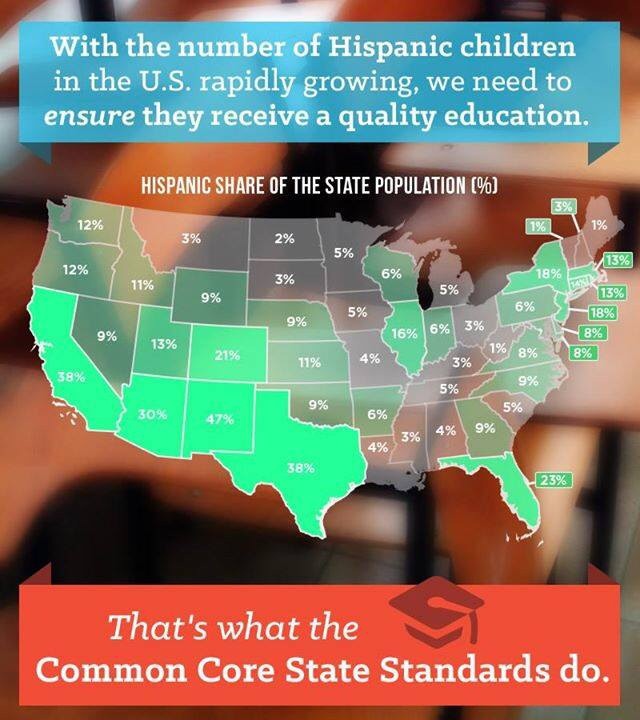
In recent weeks, there has been significant chatter about the shift in P-12 school demographics across the United States. In this Education Week piece, reporter Lesli Maxwell notes:

America’s public schools are on the cusp of a new demographic era.

This fall, for the first time, the overall number of Latino, African-American, and Asian students in public K-12 classrooms is expected to surpass the number of non-Hispanic whites.

The new collective majority of minority schoolchildren—projected to be 50.3 percent by the National Center for Education Statistics—is driven largely by dramatic growth in the Latino population and a decline in the white population, and, to a lesser degree, by a steady rise in the number of Asian-Americans. African-American growth has been mostly flat.

These shifts have results in folks talking about “majority-minority districts,” those school districts where the number of white students is less than the number of minority students. Of course, such a concept is nothing new. We have long had districts that were majority African American or majority Latino or majority Asian-American. But the rapid shift of some districts, going from majority white to majority minority is sure to catch folks’ eye.

Why does Eduflack raise this? Because of personal realization. Last evening, the edu-wife and I headed over to our local school for a “new parents orientation.” It was a great event. The teachers and administrators who led the event were top notch. The orientation went as scheduled, with nothing taking them off track., And for a welcome for district-wide new parents in the middle of August, the school auditorium was almost standing-room only, with most families represented by both parents.

And then there was the parents themselves. In a sea of parents, the edu-wife and I were one of only a handful of parents who were not of color. I may have missed a few, but it seemed there were maybe five or six other parental sets that looked like us. There is no question we had moved into a “majority-minority” district.

We picked the town because of the schools. Great schools. Experienced teachers. Strong attention on the whole child. A running list of services and opportunities to ensure our kids get the best public education possible (particularly important in a house with a struggling reader).

Out of curiosity, I checked out the demographics this morning. We live in a community that, as a whole, is about 55 percent white. Last year, 33 percent of the student population was white, representing a major shift in resident demographics over the past two decades.

Then I dove a little deeper into the student demographics. Minority students comprised 70.6 percent of last year’s first grade class. And 75.5 percent of last year’s kindergarten class. And 87.8 percent of last year’s preK class.

So why write about this on this little ol’ blog? No, it isn’t that I am just waking up to demographic shifts in our country. As the father of two Latino students, it is something I am well aware of. 

The real answer is we need to get to the point where we stop thinking about majority-majority and majority-minority school districts. What I saw last evening, and what I have seen in countless schools where I’ve visited or observed, is that this is America. Our schools are now the melting pot that our Founders envisioned. They are where stereotypes can be broken .., or reinforced. They are where opportunity can be found, regardless of race or family income.

I’m proud that my two kiddos are now going to be a part of that educational quilt. They will meet kids from backgrounds they know nothing about (there are more than 45 languages spoken in our little ol’ district). They will be on the frontlines of that new demographic area. And it will seem completely normal to them.  

Is Education a “Top” U.S. Issue?

Today, Gallup came out with its latest public opinion poll on the top problems in the United States. It should come as no surprise that dissatisfaction with government was at the top of the list. Whether frustrated with a do-nothing Congress, an overreaching president, or general frustration with Big Brother telling us what to do, Americans speak loud and clear that they are frustrated with government. (Of course, they are coming at it from all sides, so there is no clear fix.)

Immigration is a close second, with the economy coming in third. All of the issues we would expect to see at the top of the list for our citizenry’s general frustration.

So where is education on the list? Surely with all of the national fights over testing and Common Core and teacher tenure and everything else that is keeping edu-minded Americans up at night, concerns about our educational systems must be right up there, right?

Uh, not quite. Education comes in with a thud at number nine. It follows poverty and comes in just above the national debt. Where 18 percent of Americans say government is our top concern, and 15 percent say it is immigration, a whopping 4 percent say it is education. And that is now down a percentage point (or 20%) from last month.

Should this surprise us? No. For decades now, we’ve long realized that education is not a ballot box issue. Sure, we are all concerned about education, but it isn’t an issue that is make/break for us. We care, but not before we care about six or eight other issues first.

What do we do about this? First, we need to recognize that while many of us live in the edu-bubble, the vast majority of Americans do not.

Second, we need to be mindful of how education ties into the topics that are driving concern. Concerns about government? We see that extended in frustrations with everyone from EdSec Arne Duncan to local superintendents and principals. Immigration a concern? Especially as it relates to those kids who are stuck at the border, looking for a better life and opportunity that begins with access to our public schools. Economy a worry? How does that crosswalk with grad rates and STEM and higher education in general?

The short story is that education does not live in its own silo. It permeates each and every topic of discussion and concern that we have. If we treat “education” solely with a neat little k-12 or higher education label, we miss the bigger picture. And we lose the opportunity to draw attention to both the concerns and the solutions.

I yield the soapbox …


Excellent Teachers, Meet High-Needs Schools

We are constantly hearing about the struggles finding (and keeping) effective teachers. And the discussion gets louder and louder when it comes to placing (and keeping) such teachers in high-needs schools.

A decade ago, the Feds tried imposing “highly qualified teacher” provisions on such schools, but those provisions have had little lasting impact. Next came a collective push for merit pay for teachers, particularly those in hard-to-serve schools. But again, the data on whether such efforts improved student outcomes or improved placement efforts is still TBD.

So the (multi) million-dollar question is, what can we do to ensure that excellent teachers are being placed in our high-needs schools?

Over at Education Week, Arthur Levine, the president of the Woodrow Wilson National Fellowship Foundation, offers some sage insights on what it takes to match great teacher with in-need schools.

Based on the Foundation’s experiences with Woodrow Wilson Teaching Fellow programs in Georgia, Indiana, Michigan, New Jersey, and Ohio, Levine offers 15 specific lessons from their on-the-ground efforts working with real teachers at real ed schools in real states before moving those educators to real schools.

These lessons provide a real, effective blueprint for successfully addressing the teacher quality debate. From selectivity to one-year masters programs, accountability to recruitment, partnerships to sustainability, these Woodrow Wilson exemplars can serve as tent poles for future efforts across the country.

And Levine knows of what he speaks. The former president of Teachers College was ahead of his time was ahead of his time in focusing on how to address teacher prep for the 21st century while at TC. And he is ahead of the pack with the Teaching Fellows initiative.

The lessons put forward by Woodrow Wilson Foundation are important for both the five states currently invested in such a path, as well as for the 45 states that should be pursuing similar ideas. If nothing else, they serve as an essential launch pad for where the we need to start focusing when it comes to identifying and preparing excellent teachers for a career in the classroom.

Rather than looks for the next fad or the newest silver bullet, isn’t it time we look to proven ideas for getting excellent educators in hard-to-staff schools? Levine’s list serves as the syllabus for such a discussion.

full disclosure, Eduflack serves as a director at the Woodrow Wilson National Fellowship Foundation.

“Not All Public Schools Are Created Equal”

Earlier this week, I got into an interesting Twitter debate with another edu voice. On the morning in question, I had posted a quote from Sen. Rand Paul, taken from a Politico story on his speech before the National Urban League.

The quote was a simple one. Senator Paul said to Politico, “I grew up and went to public schools. My kids have gone to public schools. But frankly, not all public schools are created equal.

I was taken by the statement for a few reasons. One, it is a belief that I share. Two, it was an interesting statement delivered by a Libertarian at the National Urban League. Not the typical speaker for Urban League, and definitely not the usual audience for Rand.

And then the back and forth began. I was accused of being irresponsible for giving credit to someone who wanted to “destroy public education.” How dare I say all public schools aren’t equal? This is just a veiled effort to promote charter schools. Paul’s budgets are irresponsible. Why am I elevating his man in his search for the presidency? How can I contribute to the rapid decline of this great nation?

A little hyperbole, yes, but interesting responses none the less. While I’d like to think a tweet from me would determine whether someone could win the highest office in the land, we all know nothing could be further from the truth. But let’s go to the edu-portion of this debate.

Can we honestly say all public schools are equal? When parents are charged with “stealing” public education by sending a child to a non-assigned district, is there really any question? When we look at data from the Schott Foundation, citing the vast inequities in access to college prep high schools, should we still be debating they “all is well?” When we still have dropout factories and pathways to the Ivies, must we ask the question? When upwards of half of black and brown students struggle to read at grade level, yet well-to-do white students are doing fine, is there any doubt?

Rand Paul raised a point that we all need to examine. We should all be supporters of public schools. I, for one, am a product of public schools. My mother is a retired public high school teacher. I insist my kids attend public schools. And I know, each time we have moved, that the quality of the local schools was our primary factor in decision making.

One can question whether we should scrutinize a politician’s rhetoric to see if it matches his actions and whether his votes match his public commitment to an issue. We should analyze records and seek out a bigger understanding. We should cast our votes based on the totality of a candidate and his record. And yes, this is sounding like a Schoolhouse Rock song.

But we should also look for every opportunity to raise the profile of education issues. We should hope that Rand Paul’s statement forces more Republicans to see the value and opportunity in truly public education. We should hope that groups like NUL recognize that public school support should not be a partisan issue. And we must all realize that, even if we have unimaginable love for public education, there are leaders and laggards and we all can do more to ensure that all kids have a great public education, regardless of race, family income, or zip code.

If not, we will be fiddlin’ as edu-Rome burns. For too long, too many kids have been at risk or left behind because we argue over whether all is well. Ask a fifth grader who can’t read, a recent graduate who needs to take all remedial classes, or a teacher who hasn’t had books for three years if all public schools are equal. Go ahead. I dare you …

“Don’t Call Them Dropouts”

Over at GradNation, America’s Promise Alliance is running a blog series on its new report, “Don’t Call Them Dropouts.” The report is an important one, making clear there is no quick-and-dirty explanation as to why so many fail to earn their high school diplomas. More importantly, America’s Promise Alliance has launched a valuable discussion on what the report really means and how we can move its findings and observations into meaningful policy that increases high school graduation rates and pathways to success.

Eduflack was proud that he was asked to contribute to this series, and my post is up this morning. In Driving To a Better Future, I write about how we can better engage students at risk, and how it could have impacted my family.

From today’s GradNation post, in telling the story of my grandfather:

Oh, how times have changed. A high school diploma is now a non-negotiable. My grandfather would not have been able to join the Army without a high school diploma. And the chances that he would be able to buy a house and raise a family where all five of his kids would graduate from high school would be slim. 

I urge you to check out the full post, and spend some time exploring some of the other posts on the GradNation blog. It is well worth the read.


The EdSec and the EWA

On the closing day of the 2014 Education Writers Association National Seminar, U.S. Education Secretary Arne Duncan (a regular speaker at the annual event) delivered the keynote address. 

After dispensing with the pleasantries, the EdSec launched into a speech that most in the room had heard, in one iteration, several times before. As he dove into his prepared remarks, the EdSec stated, “I often say that education is the civil rights issue of our generation. I want to elaborate on what that means and how the pursuit of equity runs like a ribbon through the Education Department’s programs and the initiatives launched by President Obama.”
The EdSec then launched into a passionate detailing of the work that his agency has engaged in for the past years. Some of the nuggets he offered:
  • “There
    is the outrage over our nation’s achievement gaps and the fact that millions of
    our children still don’t receive equal educational opportunity.”
  • “Today,
    we worry both about achievement gaps and opportunity gaps. Because we haven’t provided
    access to high quality early learning to all families, millions of children
    enter kindergarten already behind their peers at the starting line of school.
    That is profoundly unfair.”
  • “The
    bottom line is that students of color, students with disabilities, and English
    learners don’t get the same opportunity as their White and Asian-American peers
    to take the math and science courses that figure importantly in preparing for
    careers and college.”
  • “No
    one has been hurt more in recent years by low standards and a lack of accountability
    for student learning than our most disadvantaged students.”
  • “Without
    accountability, there’s no expectation that all children will learn. Without
    accountability, there’s no urgency. Without accountability, without meaningful
    assessments of student learning, parents don’t have an objective way to know whether
    their children are getting the education they deserve.”
  • “Unfortunately,
    in 2014, we don’t treat inequality and inequity in schools with the urgency and
    seriousness of purpose it deserves.”
  • “Too
    many Americans today have become complacent about our educational performance.”
  • “We
    have achievement gaps and opportunity gaps. But more importantly, we have a
    courage gap and an action gap.”

The full text of the prepared remarks can be found here, courtesy of Joy Resmovits of The Huffington Post.
All of these are great soundbites, and they were delivered with real passion. And following on the 60th anniversary of the Brown v. Board decision this past weekend, all are timely and relate to many of the issues those in attendance have been thinking, speaking, and writing about for the past week.
But for an audience that has heard the EdSec’s “civil rights issue” stump speech many times over the past five years, was it the right set of remarks to deliver? When so many in the room were eager to hear the EdSec relay some new information or news regarding the U.S. Department of Education and its activities, did these remarks deliver on the promise?
In a room that was looking for a little red meat and something new and shiny, they got the same appetizers they’ve been served many times over. Or maybe Eduflack missed something …
 

PR People, Education Style

This week, PR News magazine recognized its PR People of the Year.  One of the leading communications publications in the nation, PR News seeks to honor the best of the best in the field, everything from community relations to media relations, social media to agency leader, top agency to top PR team.

It also recognizes the top 30 communications professionals under the age of 30, naming them as the “ones to watch” in the field.  (And, gulp, it was 13 years ago now that Eduflack was named to that list, back when his professional focus was on defending not-for-profit hospitals from corporate takeovers.)
As part of its PR People Awards, PR News also names the Public Affairs Professional of the Year, a recognition given annually to “a leader in political and public affairs who has successfully spearheaded advocacy initiatives and influenced policy and public opinion.”  I am honored and humbled that I am the recipient of the 2013 award.
The judges awarded me the honor, noting that “In one year as CEO of the education reform group ConnCAN, Patrick Riccards propelled the organization further than its previous seven years put together, became the voice of education reform in Connecticut and was instrumental in the passage of the most comprehensive education reform package in the state’s history.”
While I don’t know who to thank for putting me up for the award in the first place, this is definitely a shared recognition with all of those who have helped advocate for school improvement in Connecticut and all of those individuals and organizations who helped us pass such a significant reform bill in 2012.  I’m deeply proud of my work at ConnCAN, the eight years of progress the group has made since its founding, and the terrific team of which I was but a part (and equally proud of my team at Collaborative Communications Group, where we are having real impact, every day, improving learning opportunities in communities across the nation). I also remain hopeful for the impact those reforms can and should have on students across the state.
Thank you, PR News, and thank you to all of those committed to improving public education.  We are fortunate to have so many well-meaning and committed individuals and organizations focused on influencing public affairs and public opinion in the education space.  Whether one is a “reformer” or a “status quoer,” there is much good work happening, and much one can learn from colleagues, partners, and opponents.