
Uncategorized
Accolades and Gratitude
Allow me a few moments of self-congratulation here on the pages of Eduflack. In recent weeks, I’ve learned that my book, Dadprovement, has been recognized by two major organizations as part of their 2015 book awards.
The book is a finalist for the 2015 Next Generation Indie Book Awards in the parenting category, and will be recognized at a ceremony at the end of the month.
And I’ve just learned that Dadprovement is also a finalist in the 9th Annual Indie Excellence Awards in the personal growth category.
I honestly wrote the book as a form of therapy. I had been telling the first part of the story for years, the part about how our family came to be, and folks would regularly tell me that I should write it down before I forget it all. So I finally took them up on it. But as I was writing that story, a whole new story came out of me. Chapter after chapter, I was better understanding how my role as a father and husband was evolving. And it seems just as important a part of the story. Consider it how we came to be to what we can become.
When Turning Stone Press wanted to publish the book, I was beside myself. Now, when I hear that someone has read the book or that they learned X about themselves or when I am asked to write or speak on the topic of fathers and parental engagement, I am reminded just how lucky I am. Lucky to have the family that I have, and lucky that I’ve learned what I’ve learned before it is too late.
So to now have groups like these decide that Dadprovement was one of the best books of the year on topics like parenting or personal growth, I am just moved beyond words. And I am very, very grateful to all of those who have helped make it possible, both for me as an author and as a person.
Focusing On Family … And Winning
Most readers of the Eduflack blog know that I am both a proud father and an author of a book about the adoption of my children and the evolution of my view on what a good dad truly means. That book, Dadprovement, was the topic of my SXSWedu speech in Austin earlier this year, and it is a big part of my writing and my thinking each and every day.
Folks are noticing this call for more engaged fathers. Exhibit One? This month’s issue of WorldClass magazine.
Yours truly is actually on the cover of the issue (yes, I realize that means it is unlikely to sell many copies). But the content of the piece is one that is particularly touching. The full article can be found here, but let me give you a taste:
Riccards emphasizes that balance in our lives brings us greater happiness and health, as individuals, and it benefits our children, as well. For example, he points to a study that shows that “in those households where daughters saw their fathers washing dishes at home, those daughters were going to be more ambitious and were going to push and achieve more in their own lives.” That kind of yin and yang between the personal and the professional is important for everyone in the family, both genders.
“We have been hearing for years now . . . that if women want to truly be a professional success, then what we need is for them to behave more like men, and they need to focus on their careers and not so much worry about the personal or worry so much about the family. At the end of the day, we are selling everybody this horrible lie,” Patrick Riccards.
Riccards explains that, too often, men become overly intimidated by the fatherhood process, “We need to recognize, we are going to make far more mistakes than we are going to get things right. What is important is that we continue to push that, continue to try. Mistakes make better fathers, make better families.”
I hope you will take a few moments and give the article a read. I promise you won’t be disappointed.
Why Teach Music?
Yesterday, Eduflack vented on those doing a disservice to arts education. So today, I offer up a shout out to UFT in NYC for offering the following, which is making its way around social media.
It couldn’t be more on point or more effective.

The Biggest Priority for Young People Should be Climate Change? Really, Mr. President?
“First of all, it shouldn’t be young people’s biggest priority,” Obama chided. “You should be thinking about climate change, the economy, jobs, war and peace. Maybe way at the bottom you should be thinking about marijuana.”
This was a quote from President Barack Obama, as reported this week by Politico. It was in response to questions about the legalization of marijuana and how such a move was what many young people today are seeking.
When I first read the article, Eduflack though, “good for President Obama.” But that feeling quickly left when I re-read the President’s priorities. The first thing out of his mouth that young people should be concerned about is climate change? War makes the top four?
Anyone notice what is missing there? No, President Obama made no mention of the biggest priority for young people being their education. With all of our efforts on ensuring all kids are college and career ready, with all of the work to have the highest percentage of college graduates in the world, with all of the focus on college affordability, somehow education and learning and school doesn’t quite rank on the President’s priority list for today’s youth.
If we extend the logic, are we saying that EPA and the Treasury Department, and the Departments of Labor and Defense have greater impact on the lives of today’s young people than the Education Department should?
Color me disappointed. A perfect opportunity to refocus the next generation’s thinking on what is important, and the President swings and misses. It is any wonder they grow up into voters who don’t see education issues as a reason to cast a vote?
Game On, Social Studies Teachers! Game On.
We’ve all heard the civic horror stories. Kids who can’t name their elected officials, either in the U.S. Senate or the U.S. House. Adults who can’t identify a single member of the U.S. Supreme Court. Man-on-the-street interviews who are unable to list the three branches of government. And forget asking folks if they can name a majority of U.S. presidents.
When Eduflack was a kid, we could rely on Schoolhouse Rock to help us with the finer points of U.S. history or civics. (Yes, I get I’m dating myself, but I actually own the Schoolhouse Rock soundtrack on CD and sing along when I get Conjunction Junction while on hold with someone from the U.S. Department of Education.) But today’s students are far more sophisticated and far too technologically advanced to have a singing scroll teach them about the legislative process.
So how do we teach the finer (and even broader) points of U.S. history and civics in an era when kids want to be playing Minecraft or engaging in social media? How do we apply the technological advances finding their way into our classrooms to teach the foundations and roots of our civic society?
Last fall, Eduflack wrote about how the Ted Kennedy Institute in Boston would be using simulations to teach today’s students the finer points of the legislative process. Brilliant, I said at the time. Just what we need to better engage today’s students through a medium that they better appreciate.
Not to be outdone by Ted Kennedy, today the Woodrow Wilson Foundation (those who know their civics realize a president can often trump a senator, even a legendary senator like Teddy Kennedy) announced its HistoryQuest Fellowship. In partnership with the Institute for Play, the Woodrow Wilson Foundation has created a new program for classroom educators to help them learn and use gaming to teach social studies and civics in their classrooms. The full announcement can be found here.
In launching this new effort, the Woodrow Wilson Foundation is clearly stating that effective instruction can be adapted to meet the needs and interests of the children in the classroom. Recent survey data has shown that 78 percent of teachers who use games have seen an increase in student mastery of curricular content and skills. So how better to take advantage of technological advances and student interests than incorporating games into teachers’ lessons and equip educators to create their own game-based learning experiences for kids.
Woodrow Wilson is currently soliciting nominations for the inaugural class of HistoryQuest Fellows, focusing on secondary school educators in New Jersey. This first cohort will begin its work this summer, with hopes that the lessons learned from HistoryQuest can be applied to improve WW’s work in teacher and education leader preparation across the nation.
Imagine playing a 21st century version of Axis and Allies to better understand World War I. Imagine learning about the western expansion through a Minecraft-like platform. Imagine learning about the American Revolution by not only dressing the part, but actually role-playing loyalist versus revolutionary. Imagine what can be imagined by the many excellent teachers who can learn from organizations like Institute for Play and Woodrow Wilson Foundation on how to make powerful lesson plans even more effective through gaming-based approaches.
Imagine.
(Full disclosure, Eduflack works with the Woodrow Wilson Foundation.)
MLK and Greatness
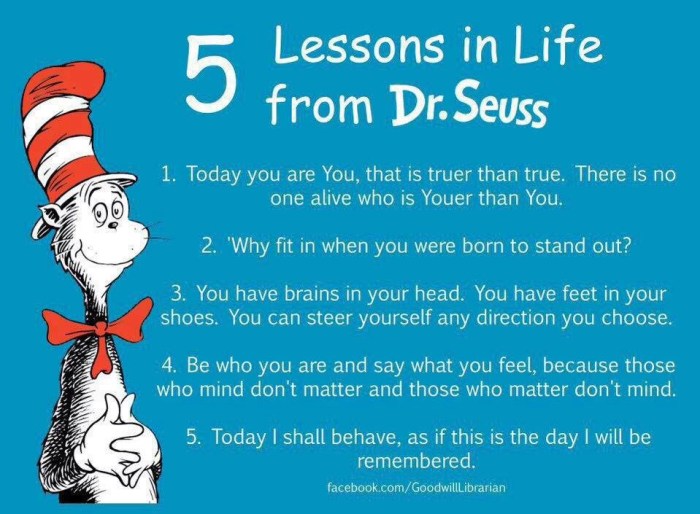
“Everybody can be great … because anybody can serve. You don’t have to have a college degree to serve. You don’t have to make your subject and verb agree to serve. You only need a heart full of grace. A soul generated by love.”
– Dr. Martin Luther King, Jr.

 Eduflack By Patrick R. Riccards