
Teaching the U.S. Senate, Ted Kennedy Style

Anyone who knows Eduflack knows that, professionally, I was greatly shaped by my experiences as a U.S. Senate staffer. I was fortunate to work for some tremendous leaders and statesmen, the sort of public officials that we seem to be in short supply of these days. Not only did they teach me about the Senate, legislative procedure, and the appropriations process, but they also taught me about service and priorities and doing what was right (and not necessarily what was easy).

It helps that I am the son of a political scientist, my dad is a presidential historian by trade actually. As a young child, I remember my father being part of the development of the John F. Kennedy Library in Boston. Getting to see that library when it opened, I remember writing a very passionate letter to my Senator at the time, Ted Kennedy, telling him how much I enjoyed my time at the JFK Library. And I remember my joy when he wrote back. Not only did I get a lovely typed letter on U.S. Senate letterhead, but It included a handwritten note at the bottom, letting me know he had a son that shared a first name with me. The letter was framed soon after it arrived, and I still have that framed letter with me today.

So it’s clear how my interests in politics and the legislative process were both started and fed over the years. But how do we do the same for other students? Next week, many of our high school students will have the opportunity to vote for the first time. But as recent surveys have show, too many young people don’t see the value in the electoral process and certainly don’t hold any faith in government and the impact it can have on its lives.

Fortunately, there are some that don’t react to such positions with a shrug of the shoulder and a “what are ya gonna do?” response. Next spring, the Edward M. Kennedy Institute for the United States Senate will officially open its doors (on March 31, actually). Building on the enormous legacy of Ted Kennedy, the Institute is committed to making the U.S. Senate relevant to learners of all ages, while using technology to better engage incoming generations of voters.

It’ll offer experiences that provide first-hand techniques of being a senator, everything from negotiation to bill drafting to debate to voting. It’ll even offer a tech platform so visitors can simulate being a “senator.”

With 2014 elections looming, and with attention already shifting to 2016 presidential elections, the Edward M. Kennedy Institute is offering a really cool opportunity for educators now. The good folks over at the Institute are offering access to its Senate Immersion Module now, where educators can test the three-hour experience of living the Senate life. They will even get to do it in the Institute’s replica of the U.S. Senate chamber, the cornerstone of the Institute. You can check out the Module here.

Those educators who might have interest in taking the Senate Immersion Module out for a spin or who may want to schedule a field trip can reach out to the Institute at SIMSCHEDULE@EMKINSTITUTE.ORG.

Classroom instruction. Ed tech. Experiential learning. U.S. Senate. Politics. Ted Kennedy. Something new and shiny. And even a chance to drop by the JFK Library after the fact. How can you go wrong?

And if you aren’t able to take advantage of the preview, plan to visit the Institute when it opens. As a huge fan of presidential libraries, as one who played a small part in helping make the Robert C. Byrd Library a reality, and as someone who still cherishes his Ted Kennedy letter, I’ll be there.
 

The State of Indian Schools

Back when my mother made the decision to enter the teaching profession, she did her student teaching at an Indian school in New Mexico. At St. Catherine’s Indian School in Santa Fe County, my mother gained the clinical experience that helped her develop into the exemplary high school English teacher so many of her students know her for.

Why the trip down memory lane? Over the weekend, the Associated Press’ Kimberly Hefling wrote an interesting piece on the current state of the modern-day Indian school.

In the piece, she describes one school in Arizona as such: “The school, which serves 81 students, consists of a cluster of rundown classroom buildings containing asbestos, radon, mice, mold and flimsy outside door locks. The newest building, a large, white monolithic dome that is nearly 20 years old, houses the gym.”

When we talk public education and school needs here in the United States, we often focus on inner-city schools and the challenges they face. It is rare that Indian schools (or rural schools in general) are a central part of the discussion. If you haven’t read Hefling’s article, please do. It is worth the read and paints a too real picture of the work ahead of us.

No Homework!

I’ll admit it. My children attend a high-performing school district. We chose our neighborhood because of the strength of its local elementary school and the overall performance of the school district as a whole.

The experience, to date, has been quite interesting. At a recent parent/teacher night at the school, parents were jockeying for the right to talk to the special education teachers, believing there might be another educator or another source of learning for their children. It was of no concern to them that their children would never be classified as “special ed.” It appeared to be a resource available to the school, and they were going to take full advantage of it. These aren’t just involved parents, they are involved parents on steroids with the helicopters waiting in the parking lot.

So it was refreshing to get a note home from the superintendent declaring, “No Homework Nights.” For my kiddos, it is a evening almost as worthy as celebration as Christmas. It means more time playing outside. Some screen time on the iPad on a school night. A night the homework folder stays closed. And for the edu-wife, it is a day absent of the typical fights and struggles to get all the homework done, and done at the level of effort expected from the district.

The note itself, though, is worth sharing. So I do so below:

This year, XXX will be initiating four No Homework Nights.  While there is tremendous value in engaging in meaningful homework assignments that reinforce concepts and skills taught during the school day, there are times when we need to collectively have a break from the responsibilities of homework and enjoy time with family and friends.
The first No Homework Night will be held on October 22, 2014 . For planning purposes, this means that students would not have homework on this night, and no assignments, homework, reports, or tests scheduled for Friday, October 24, 2014. [October 23, 2014, is a professional development day for teachers and staff; there is no school for students.]
We believe No Homework Nights will have positive benefits for all of us. No Homework Nights give students a night off from preparing homework and projects and studying for tests. It also gives students an opportunity to spend time relaxing with family, enjoying outside activities, and attending XXX sporting events.
Moving ahead, here are the other dates for No Homework Nights in XXX: December 16, 2014; February 10, 2015; and May 8, 2015. Please mark your calendar for these dates!

While I’m thrilled that the school district recognizes the value of free time for our kids, should I be a little disturbed that we have only four No Homework Nights all school year? Particularly when there is weekend homework already assigned? Time will tell. All I know is that next Wednesday, it will be party time in the Eduflack house.

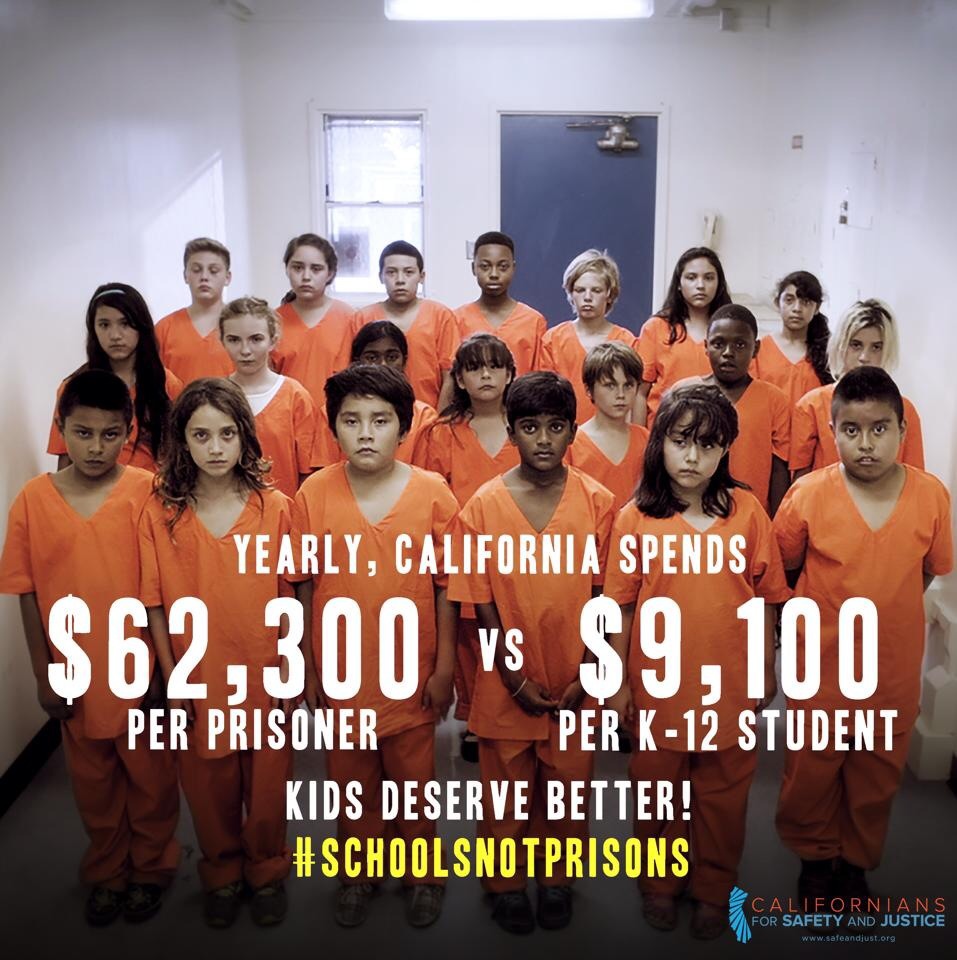
The True Costs of Education

Since I’ve been involved in education reform issues, I’ve heard a lot about the costs of education. The haves and have nots. Money following the child. Merit pay for teachers and students. What gets sacrificed during lean budget years.

But we still talk to little about the costs when we don’t provide all kids with a great public education or what happens when we allow race, family income, or zip code determine how good a “good” public education really is.

When I saw this from Californians for Safety and Justice, it helps bring it all into perspective. Yes, we need to make sure that tax dollars are spent wisely. But can we really argue about where our priorities should be?

IMG_1241.JPG

Student Journalism, Student Freedoms

Although Eduflack is several decades removed, I still look fondly on his student journalism experience. In high school, I remember a principal who would often tell us what we could or should not be writing about. At the time, I didn’t think much of it. It was high school. I was engaged in other activities. And I just didn’t think it really affected me much.

College was a different story. While I was a student at the University of Virginia, I really see my college years at The Cavalier Daily. The CD was an independent newspaper at U.Va. We published daily, typically 12 or 16 pages a day. I ultimately served as managing editor of the paper, overseeing a volunteer staff of nearly 150 and the content that was put out each day. We never got paid. We never received college credit. We did it for the love of journalism.

When I was on the managing board, we faced a particularly delicate issue involving the University’s Honor Committee and the son of a prominent internationally recognized businessman. We broke the story. We had papers like The Washington Post and The Richmond Times-Dispatch looking to our coverage (and at times, even calling our printer to try and get an advance read before the papers hit the news stands in the morning).

Because of the high profile, it was a tough issue for our managing board — five kids in their early 20s — to navigate. We received many threats. We had the University and others talk about lawsuits against us for violating the sanctity of the Honor system. We had legal counsel on speed dial (a former CD alum who looked out for us and did a helluva job). And we continued to publish. We continued to push. We continued to throw a spotlight on a system that was treating a student of incredible means and of powerful upbringing differently than the average student when it came to our single-sanction Honor system.

Our news coverage ended up winning multiple awards from the Virginia Press Association and praise from free press groups. Every step along the way, we heeded the words of Thomas Jefferson that appeared on our masthead every morning.

For here we are not afraid to follow truth wherever it may lead, nor to tolerate any error so long as reason is left free to combat it.

Why do I take this little trip down memory lane? I do so because of the student journalists of the Playwickian, a student newspaper at Neshaminy HIgh School in Pennsylvania. The newspaper has had student activity fees withdrawn and its advisor and journalism teacher suspended. According to news reports, the principal and the school board have sought to dictate editorial policy for the newspaper, demanding the student journalists follow orders from on high. And just last week, the editor in chief was stripped of her position by the administration.

What was their offense? Did these student journalists print profanities? Did they libel school or community leadership? Did they violate federal law about the privacy of student records?

No. They refused to publish the school mascot’s name. The name in question? Redskins. These journalists followed the lead of publications like The Washington Post and refused to use what they saw as a racist term in editorial coverage (namely a letter to the editor). And when facing pressure, these journalists and their advisors stood their ground.

You can read more about their issue on the #FreethePlaywickian Indigogo campaign.

Around the nation, we are seeing professional media outlets praised for doing what these student journalists are doing. We are also reading more and more about media freedoms around the world being at risk. We should be honoring these students for taking a stand they believe in. We should be praising them for embodying everything a free press stands for. We should raise them up as an example of how students and the media can lead.

This isn’t about whether one feels the Redskin mascot is racist or not. This is about media freedoms. It is about student journalism. And it is about teaching one to stand up for their beliefs. It is, as Jefferson wrote, about using reason to combat those errors we see in society.

I proudly stand with the Playwickian I just pledged my financial support to help them.. And I hope some of these journalists will one day join The Cavalier Daily and other fine examples of student journalism found around the country.

Self-Awareness on “Majority-Minority Districts”

In recent weeks, there has been significant chatter about the shift in P-12 school demographics across the United States. In this Education Week piece, reporter Lesli Maxwell notes:

America’s public schools are on the cusp of a new demographic era.

This fall, for the first time, the overall number of Latino, African-American, and Asian students in public K-12 classrooms is expected to surpass the number of non-Hispanic whites.

The new collective majority of minority schoolchildren—projected to be 50.3 percent by the National Center for Education Statistics—is driven largely by dramatic growth in the Latino population and a decline in the white population, and, to a lesser degree, by a steady rise in the number of Asian-Americans. African-American growth has been mostly flat.

These shifts have results in folks talking about “majority-minority districts,” those school districts where the number of white students is less than the number of minority students. Of course, such a concept is nothing new. We have long had districts that were majority African American or majority Latino or majority Asian-American. But the rapid shift of some districts, going from majority white to majority minority is sure to catch folks’ eye.

Why does Eduflack raise this? Because of personal realization. Last evening, the edu-wife and I headed over to our local school for a “new parents orientation.” It was a great event. The teachers and administrators who led the event were top notch. The orientation went as scheduled, with nothing taking them off track., And for a welcome for district-wide new parents in the middle of August, the school auditorium was almost standing-room only, with most families represented by both parents.

And then there was the parents themselves. In a sea of parents, the edu-wife and I were one of only a handful of parents who were not of color. I may have missed a few, but it seemed there were maybe five or six other parental sets that looked like us. There is no question we had moved into a “majority-minority” district.

We picked the town because of the schools. Great schools. Experienced teachers. Strong attention on the whole child. A running list of services and opportunities to ensure our kids get the best public education possible (particularly important in a house with a struggling reader).

Out of curiosity, I checked out the demographics this morning. We live in a community that, as a whole, is about 55 percent white. Last year, 33 percent of the student population was white, representing a major shift in resident demographics over the past two decades.

Then I dove a little deeper into the student demographics. Minority students comprised 70.6 percent of last year’s first grade class. And 75.5 percent of last year’s kindergarten class. And 87.8 percent of last year’s preK class.

So why write about this on this little ol’ blog? No, it isn’t that I am just waking up to demographic shifts in our country. As the father of two Latino students, it is something I am well aware of. 

The real answer is we need to get to the point where we stop thinking about majority-majority and majority-minority school districts. What I saw last evening, and what I have seen in countless schools where I’ve visited or observed, is that this is America. Our schools are now the melting pot that our Founders envisioned. They are where stereotypes can be broken .., or reinforced. They are where opportunity can be found, regardless of race or family income.

I’m proud that my two kiddos are now going to be a part of that educational quilt. They will meet kids from backgrounds they know nothing about (there are more than 45 languages spoken in our little ol’ district). They will be on the frontlines of that new demographic area. And it will seem completely normal to them.  

The Future of American Higher Education?

Last week, The Atlantic ran a cover story on “The Future of College.” As we have heard many times over the past few decades, the article lamented the death of higher education as we have long known it, focusing on a future “by stripping it down to its essence.”

In this case, it meant looking to the work of the Minerva Project, a for-profit effort to “replace the modern liberal-arts college.”

Of course, one could ask what the “modern liberal-arts college” actually is. If we look at the thousands of college campuses around the United States, there is little modern about them. Sure, we may have new buildings and have replaced card catalogs with technology, but what is taught and how it is taught is largely unchanged. Liberal arts, as our parents or grandparents may have studied it, is very much like the liberal arts education our children have received today.

We’ve heard many stories like those coming from the Minerva Project. University of Phoenix made a similar promise. Just a few years ago, we were told that MOOCs were going to do the same thing, put the final nail in traditional higher ed’s coffin and usher in a new era of consumer-based higher education.

Years ago, when Eduflack was working in for-profit higher education, I remember having discussions with researchers about why we would expect traditional higher education to change. People will pay tens of thousands of dollars a year to access the current model. Acceptance rates and wait lists tell us that the demand is larger than the supply. That just tells us we should be charging more. There is real hunger for what we have now, so why change it? Why have a “New Coke” moment in higher ed when we all are clamoring for Coke Classic?

The arguments are enough to frustrate even the most aggressive of cynics. Why repair or replace our existing IHEs? Why fix something that so many people don’t see as broken?

We are reminded of why this past weekend in an editorial that appeared in the Chicago Tribune (and was republished in the Indianapolis Star here). Its editorial board looked at the efforts of current Purdue University President (and former Indiana Gov.) Mitch Daniels and his push to reinvent the American university on the Indiana campus.

In its analysis, the Trib noted, in looking at Daniels’ approach to financial management at the IHE:

Daniels isn’t the first college chief to cut costs or hold tuition steady. We know that many schools are pushing hard to make higher ed affordable; a few have even trimmed tuition rates. But it’s big news when a major university freezes tuition, even for a year. Would that such news, accompanied by news of frozen spending, were ho-hum routine at many campuses.


Unfortunately, it isn’t. Daniels offers a chart (reproduced nearby), which won’t shock parents struggling to pay for college. It traces how tuition costs have outstripped inflation since 1990.

“In our view, that game that relied on jacking up costs year after year is over,” he tells us. “The marketplace is beginning to rebel.” Does he worry that Purdue could be unilaterally disarming against other schools still investing lavishly in amenities for students? “It could be that we’ll still lose students to someone with a higher climbing wall, but we are prepared to take that chance.”


Daniels isn’t focused solely on cost cuts. He’s also invested in expanding Purdue’s engineering and computer science programs, among others. In a letter to the Purdue diaspora, he set this goal: “If we can maintain a campus-wide commitment to holding costs down, counting every $10,000 saved as a ‘student tuition equivalent,’ we can fulfill our duty to our students, taxpayers and everyone who chooses to invest in Purdue’s enterprise.”

 It is an interesting approach, and one that is far too unusual in higher education today. Focusing on the students as consumers, and ensuring they are getting ROI and tuition (and state) dollars are being spent wisely and focused on educating the students themselves. Investing in new programs that better provide students the pathways from higher ed to the jobs their communities and states and nation have the most need to fill. And a recognition that just because we have done things one way in the past, and just because our peers may now do it that same way, does not mean it is what is best for our institution, our students, and our nation.

As the Trib summarizes:

The ultimate test of Daniels’ tenure: Will a focus on value help lift moderate-income students into productive lives and careers? Might a degree from a leaner, no-nonsense Purdue gain luster at a time when other campuses project the creature-comforting images of country clubs?


Ultimately students and hard-pressed parents will vote with their feet, and their checkbooks, on whether Daniels has succeeded at making an already fine institution a greater value than it is today.


A greater value, that is, than other major universities that compete with Purdue to educate the best and brightest.

That is indeed the case. When we talk about the future of higher education, it will be decided by the outcomes and byproducts of its work. The universities that will thrive will do so because they will meet the changing needs and expectations of their customers. They will offer a high-quality product that aligns with their students and the career opportunities they seek. They will be prudent with the dollar. And they will realize we must begin to change structures and approaches to ensure we are meeting the future needs of our students and communities, and not simply using IHEs to pay homage to educational days of yore.  

Lesson from Peter Rabbit?

As the father of a struggling reader, I was surprised to see this olde tyme cover of a Peter Rabbit book. The scowl on Peter’s face, the result of needing to go back to school, makes me think of just what I’ll be seeing in a few weeks when the eduson needs to give up his summer of freedom and start third grade.

Don’t know who to credit for the photo, but whoever you are, thanks much!

20140803-204653-74813635.jpg