
There is definitely a heaviness out there regarding the news and the issues of the day. So a meme like this is just needed, courtesy of Reading is Fundamental CEO Carol Rasco.
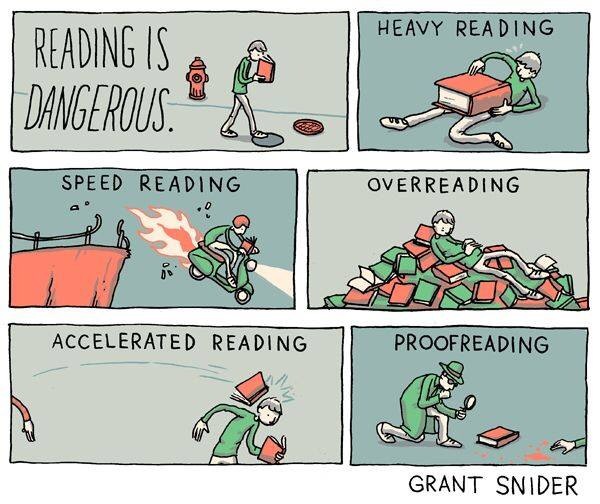
There is definitely a heaviness out there regarding the news and the issues of the day. So a meme like this is just needed, courtesy of Reading is Fundamental CEO Carol Rasco.
As the father of a struggling reader, I was surprised to see this olde tyme cover of a Peter Rabbit book. The scowl on Peter’s face, the result of needing to go back to school, makes me think of just what I’ll be seeing in a few weeks when the eduson needs to give up his summer of freedom and start third grade.
Don’t know who to credit for the photo, but whoever you are, thanks much!

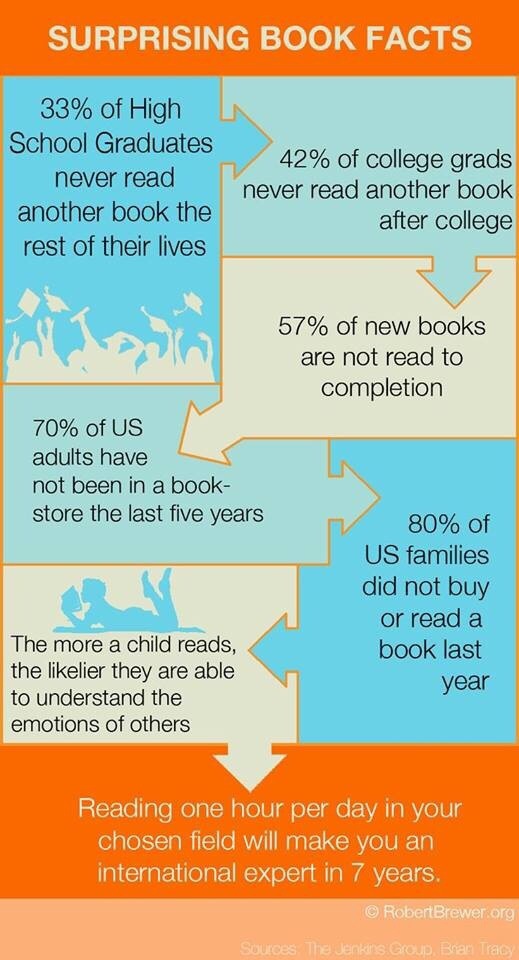
For those who think that all of those fourth graders not reading at grade level will just catch up and that we don’t need to worry about ensuring all our elementary schools are using evidence-based literacy instruction, try considering some of these stats …
My deepest apologies to Eduflack readers for not being active here in the past few weeks. As I noted last year, dear ol’ Eduflack has been involved in some long-form content creation (meaning book writing). It took up many months of my time last year (thus the hiatus) and has come back to require my attention over the past few weeks.
The latest volley has been launched in the ongoing battle against the evils of testing. Today, the folks over at No Test, sorry, meant Fair Test, released a letter they coordinated from more than 100 children’s book authors to EdSec Arne Duncan, attacking increased testing, computer adaptive testing, teacher evaluation measures, and “the narrowing of curriculum” for eliminating students’ love of reading and literature.
Typically, Eduflack looks at education issues through a policy or a reform or a communications lens. But I’m also fortunate enough to be parent. A parent of a first and a second grader.
“Der Parints,Az ur child brings hom riting 4 the frst tim, doo not b srprizd at the spelling. The inglish langwij iz a confuzing langwiz 2 lrn. Insisting that stoodents uz ‘correct’ spelling nhibits thair dzir and abilite 2 rit. We aftn uz ‘phonetic’ speling in r wrk.Az parints, u can hlp ur child bi praising awl thair riting. Let ur child red thair riting 2 u. Displa thair riting around ur hows. No that az ur child bcums fumilyr with the inglish langwij throo reding and riting, he or she wil mak the tranzishun to ‘correct’ speling.Thank u 4 ur suport,”
We all agree that early childhood education is an incredibly important, if not the most important, part of a successful P-12 experience. Yet despite such universal agreement, we are still failing to provide high-quality preK, particularly to those that would benefit from it the most.
The question is not simply whether or not to provide early childhood education. In a time when we are ever-focused on return on investment of scarce public dollars, the real questions should be about the rigor of the ECE program. What is the evidence base on which the program is constructed? How do we correctly target the students most in need? What is the quality and effectiveness of the educators leading an ECE classroom? What is their track record of effectiveness? This may be an unpopular thing to say in our current anti-testing environment, but we need to demand proof that the program (or approach) works and that the children it touches are gaining the skills needed to succeed in kindergarten and beyond.
There is no question it is an important debate. Hopefully, we continue to take a closer look and continue to take meaningful actions that are proven effective.
Late March is always fun because it means the start of the K-12 education conference gauntlet. This weekend, Eduflack is out at ASCD’s 2011 Annual Conference in San Francisco. On Saturday, I’ll be leading a session entitled: “Moving Good Ideas to Real Results: Public Engagement and School Improvement.”
Another year about to go down in the history books. Are we any closer to truly improving our public schools? For every likely step forward we may have taken in 2010, it seems to be met with a similar step back. For every rhetorical push ahead, we had a very real headwind blocking progress.
 Eduflack By Patrick R. Riccards