Will DeVos Have Mastery Rule Roost?

“Now, by jettisoning the debate on proficiency versus growth for a more productive discussion of mastery, [Betsy DeVos] is making clear that what a student learns and is able to do with those lessons is the key factor. DeVos has laid down a rhetorical marker that the top-down, one-test-fits-all model may indeed be a thing of the past.”

From dear ol’ Eduflack’s latest for The 74 Million, Beyond Growth and Proficiency Lies Mastery: DeVos and the Crowning of Competence as King 

Where’s the New Education Federalism?

The start of the Trump administration promised, when it came to education, a return to state and local voices being the final word when it comes to policy. But as the US Department of Education provides its reviews of state ESSA plans, why doesn’t seem like a reinforcement of the Federalism witnessed during both the No Child Left Behind and Race to the Top eras?

That’s the question we pursue on the latest edition of BAM! Radio Network’s #TrumpED. Give it a listen. Please. 

The Consequences of Free Speech

“While it isn’t difficult to understand the calls to support that which we believe strongly and attack that from which we recoil, recent activities surrounding the Public Theater and Megyn Kelly teach us one important lesson – free speech does not mean speech free of consequence.”

From Eduflack’s latest essay, “Sorry Social Media Mob, But Free Speech Is Not Free of Consequence,” at LinkedIn Pulse 

Can You Teach a Superpower?

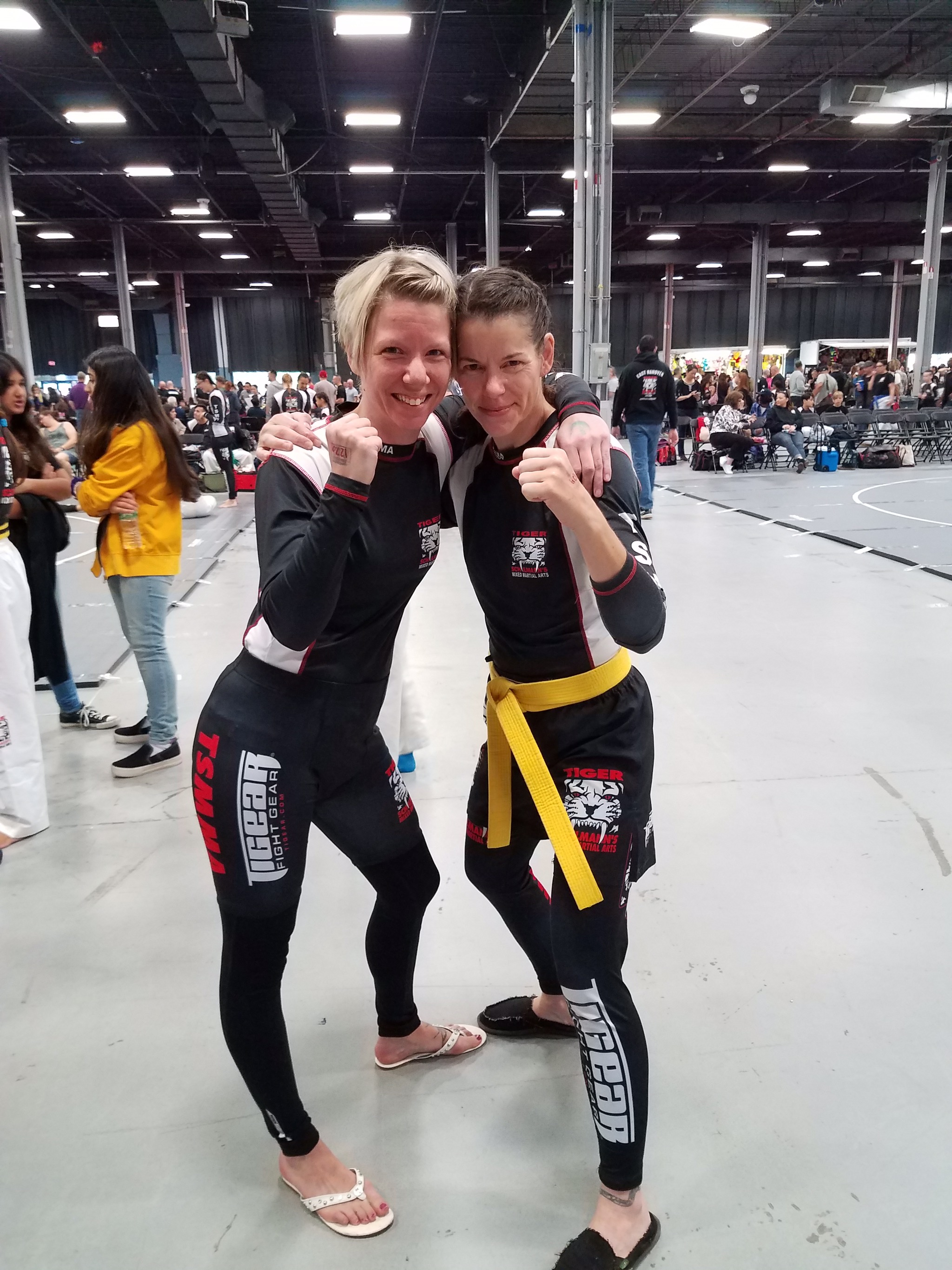
Last week, dear ol’ Eduflack wrote about the incredible learning experiences the Edu-family is getting from kickboxing. so this week, I’d like to turn the rostrum over to one of my Tiger Schulmann sisters, Amy Vondrak. 

Dr. Vondrak is a professor of English, an instigator of Utopia, and a TSMMA Yellow Belt (which means she outranks me and has physically kicked my butt on the mat.) Dr. Vondrak has captured a powerful perspective to the experience that just has to be shared whole cloth. So here goes …


A few nights ago at Tiger Schulmann’s Princeton, Sensei gave the advanced kickboxing class a scolding. About half the class had been late, which earned us quite a dressing down. The core message of his admonishment was the importance of self-discipline. In fact, the core of almost every one of Sensei’s talks is self-discipline. Now, even though (as he has often told us), “Sensei” means “born before,” I often feel just a bit odd about being the recipient of the wisdom of a man 20 years my junior. But actually, Sensei is right about a lot of things, and discipline is one of them.

During his scolding, I thought about my students, as I often do at martial arts. I’ve taught developmental composition at a community college for 13 years. Sensei teaches martial arts much like I teach writing: he takes complex series of moves and “scaffolds” them, taking them a step at a time. Learning a double-leg take down to side mount to triangle choke takes weeks as we work through each of the component parts of each move. And Sensei often tells us that if we don’t show up to class, on time and consistently, we are not likely to get any better at martial arts. I tell my students the same thing, but most of the time, they don’t listen.

I love my students. They have big dreams and so much potential. By and large, they are smart people who have been failed by an archaic educational system. But much of that potential gets lost because of the one thing they don’t have: self-discipline. They face huge challenges in life. They have jobs and kids and no money and crazy lives, so there are plenty of good reasons why it’s not so easy for them to get their work done and their butts in class. I’m not saying my students are lazy. Self-discipline is not a character trait, it’s a skill, one that they lack just as they lack writing skills. So they fail. Those of you who follow higher ed know that college students fail in great numbers. Then they feel even less able to take their place in the world, they feel even less powerful than they did when they walked into my class. That is not my mission as a teacher. My job is to show them their strength.

Along with Eduflack, I fought in the 42nd Challenge of Champions. I chose to fight up a division, literally fighting above my belt, and spent the late winter and spring trying to get mentally and physically prepared. The physical part was easier than the mental. It’s easier to face burpees than fears. But I did it: I got on the mat and I fought, as did many of my TSMMA Princeton teammates. Now, I’ve been going to the CoC as either a parent or spouse of a competitor for years, and this was my second time competing. Our family is very familiar with the emotional intensity of that day. But for some reason, this CoC showed me something I had not fully seen before: the way in which fighting lets us win our life battles. Of course, I know that martial arts is way more than a workout. Of course I’d been vaguely aware that for all of us on the mat, it’s not just about getting in shape. But this CoC gave me a glimpse into just how much we are fighting our demons, and winning. We may not be superheroes, but fighting makes us feel like when life starts shooting, we’ve got metal bracelets, a cool shield, and some amazing powers. In reality, our amazing superpower is self-discipline.

It is not easy to drag your tired self out to kickboxing on a Thursday night knowing that someone better than you is likely going to punch you in the face – sure, they’ll do it with respect and camraderie, but whatever, they’re still punching you in the face. And at the end of a few rounds of that, those burpees are waiting. But we do it. Again, and again, and again. Why? Discipline. And that discipline gives us tremendous power. We are less afraid of our demons and we are more powerful in our fight against them because our spines are stiffened with strong discipline. Bring it on bad guys, we got this.

My focus as a teacher has long been on content: how to read and write. Of course, I’ve tried for a long time to figure out how to teach grit, or growth mindset, or whatever trendy term is hot this week. But as many of the critics of those buzzwords will say, how do you teach grit? “Grit” always seems to be found in heroic stories of grand characters who beat enormous odds. In contrast, self-discipline is small and boring. Self-discipline is the accumulation of many daily acts, most of which may seem unimportant in the individual, but are massively important in the aggregate. But self-discipline is a skill which can be taught, which can be broken down into its component parts and taught a step at a time with lots of practice. So this summer I am cooking up a semester-long self-discipline project to roll out in the fall.

As a community college teacher, I’m not just trying to help students become better writers. Community college can be transformative, and it’s my job to help students feel empowered to change their lives. What I saw at the CoC was ordinary people fighting their demons with daily discipline, winning, and growing stronger because of it. This is what I want to share with my students as well – be disciplined, not just for your grade, but because your discipline will make you stronger than the world that tries every day to cut you down. Do your work. Fight for your grades. Fight for your degree. Because your fight, your discipline, gives you superpowers.


Dr. Amy Vondrak (r) with Megan Barndt.

From Proficiency to Mastery

Earlier this year, EdSec Betsy DeVos caught a great deal of flak for not acknowledging the difference between proficiency and progress when it comes to student learning. But with her remarks earlier this month, she may have changed the discussion by shifting the debate to one on mastery. 

Over on BAM! Radio Network, we examine this development on the latest edition of #TrumpED. Give it a listen!

Home Schoolers Don’t Want to Be a “Choice”

Earlier this week, EdSec Betsy DeVos continued to tease the details of the big school choice plan that is likely to come from the Trump Administration. The next day, the President’s budget reflects that same commitment to dramatically expanding access (and dollars for) public charter schools and vouchers for private education.

In all of the discussion, though, an interesting voice has spoken out asking NOT to be included in the expanded school choice plan. That voice? The homeschool community. As Eduflack explains in the most recent edition of #TrumpED on BAM! Radio Network, the reasons for this make a great deal of sense. With federal dollars comes federal oversight and regulations.  And while the homeschool community may largely trust President Trump and his administration on the topic, there are no guarantees that a future President or EdSec will hold the same level of respect for homeschoolers.

Give it a listen. I promise it is an interesting examination of an equally interesting topic.

Learning to Learn Better: The Interview

Dear ol’ Eduflack has been spending a great deal of time recently focused on the subject of cognitive science. Dating back to my time helping lead the National Reading Panel, I’ve been fascinated with learning about how people learn. And I’ve been even more fascinated by those that, despite the incredible growth in cognitive learning research in recent years, continue to believe that learning is an art, with little room for hard science.

So when I heard about the new book, Learn Better: Mastering the Skills for Success in Life, Business, and Schools, or How to Become an Expert in Just About Anything, I was sold. The book itself is terrific, weaving a tight narrative of instruction, storytelling, and inspiration. And it applies to concepts of learning, and learning better, in areas many of us may never have thought of.

That’s why I just had to reach out to Ulrich Boser, the author of this terrific book, to get some answers to the questions I was begging to ask. Most know Boser as a senior fellow at the Center for American Progress. My first interactions with him date back to when he was an editor at US News & World Report. As author of Learn Better, Boser has made an important contribution to the discussion of how we improve learning and how we ensure our educators, our institutions, and our learners are prepared for what the future of learning might bring.

Huge thanks to Boser for indulging me and stepping up on the five most important questions his book left me with. 

EDUFLACK: What was the most surprising story on learning you heard as part of your research? 

BOSER: For me at least, the story of Roger Craig was definitely the most surprising. To explain, Roger Craig thought that he might have an edge at Jeopardy after reading about an approach to learning known as spacing. The idea behind spacing is pretty simple. Since we all forget, learning should be spread out—or spaced—in order increase the amount of learning.  

So Craig began to study Jeopardy! trivia using a spaced approach, and with the help of a bit of software, he would revisit every weird Jeopardy detail in a highly distributed—or spaced—way.

Armed with this bit of the science of learning, Craig dominated Jeopardy. He first appeared on the game show in the fall of 2010 and eventually set a record for the most amount of money won in a single game.

Craig’s success at the game show tells two bigger stories, I think. First, learning often leaves as soon as it arrives, and to account for this fact, people should revisit whatever they’ve learned at regular intervals.

Second, people can use the science of learning to develop much richer skills. 

EDUFLACK: Learn Better seems to champion competency-based education, the ability of a student to both learn and be able to do/demonstrate. Is that a fair assessment?

BOSER: Absolutely. Indeed, I find the debate over competency-based education a little narrow minded, to be honest. More specifically, does anyone really argue that we should not measure competency? To me at least, it seems obvious that if students learn something, they should be able to–you know– do it.

In my mind, the more important question is: How do we measure competency? What programs and policies do we need to figure out if students can really demonstrate their learning?

From my conversations with researchers, it seems that robust learning is the ability to think in a certain field. So if someone wants to be a competent engineer, they should be able to think like a engineer. If someone wants to be a competent a car mechanic, they need to think like a car mechanic.

This isn’t as complicated as it seems, and according to a growing number of experts, this sort of thinking—and learning—often comes down to analogies. In other words, we can learn a lot by seeing the relationships within a field, by seeing how things fit together.

For me, the problem is that our education system is not aligned with the research. Standards, curriculum, tests, they often push in different directions on the issue of competency, and we need better tests and instructional tools to promote—and measure— analogical thinking within an area of expertise. 

EDUFLACK: In recent years, there has been a drumbeat that every student can and should benefit from a liberal arts college education. But as you emphasize finding value in one’s learning, is “all can benefit” the approach we should be looking to?

BOSER: I think a liberal arts education is deeply important. To engage in the world, we need a broad base of knowledge, from knowing Mozart to understanding the Battle of Mogadishu. What’s more, a liberal arts-oriented education can help us learn new things. Background knowledge helps learning, and the most reliable indicator of what you can learn is what you know.

At the same, we expect way too much of schools. In K-12 at least, schools are supposed to teach everything from reading to coding, social skills to citizenship, tuba to Picasso, plus win an occasional sports championship. That’s simply too much, and it keeps schools from focusing on effective teaching and learning. 

EDUFLACK: The thesis of Learn Better seems to place a great deal of responsibility on the learner to own his or her own education. What should teachers today be doing, or doing differently, to ensure better learning in their classrooms?

BOSER: Great question. First, I’d point out that students need to learn responsibility in the same way that they learn geometry or Spanish, and we need to give young people more opportunities to develop ownership skills in meaningful ways.

This can be difficult, to be sure. I have little kids, and as we are rushing out the door each morning—a mess of untied shoes and missing water bottles—it’s hard to imagine giving my kids any more responsibility. But giving kids some ownership is crucial. It gives them an opportunity to practice responsibility.

Second, we have to realize that people need to find their own meaning. This is key to learning, and people have to find their own meaning in a subject in order to be driven to learn that subject.

This means that just sprinkling some pop culture facts on a topic isn’t going to make it interesting. Alas, just mentioning the Kardashians during math class isn’t going to promote any robust forms of motivation.

Instead, educators should encourage students to find their own value in a topic, to figure out how the students might uncover their own relevance in a field of expertise.

Chris Hulleman at the University of Virginia puts this idea well. Motivation “is about making that connection between what people are learning and what’s going on in their lives,” he told me. “Value is the mechanism. For people, the question is, ‘Can I see why this is valuable to me?’” 

EDUFLACK: In talking about the need to shift from rote memorization to deeper thinking, I read it as a need to move learners from being generalists — or jacks of all trades — to being specialists or expert in those things that really drive them. Are we headed toward such a future?

BOSER: Yes, and in many ways, this future is already here. After all, the history of the modern world is the history of specialization, and our economy runs on people developing pretty narrow areas of expertise.

Adam Smith wrote about the power of specialization centuries ago in his book Wealth of Nations, and at its core, it’s about dividing up labor. What’s more, technology is putting a version of this trend into hyperspeed by automating more and more tasks, which requires more and more specialization.

That said, we don’t always need to become experts. Mastery isn’t always necessary. But we should stay away from rote learning. It’s simply not effective.

Let’s take changing a tire on a car, for instance. I don’t need to become expert in the skill of tire changing. My tires don’t break down that often. But I do want to go beyond a rote understanding of tire changing.

Because if I have a rote understanding, I will not be able to change a tire on any other car besides my current car. That doesn’t help me that much, especially if my friend’s car has a flat tire or if I get a new car.  

So when it comes to changing a tire, I would want to learn how to change a tire well enough that I understand some of the basic principles (like lift) and enough of the mechanics (like unscrewing bolts) that I can change the tires on different cars.

To answer your question, then, we want people to specialize–and learn some topics very well. But some generalization remains necessary, at least if you don’t want to be stranded by the side of the road with a flat tire.

Making Colleges Accountable Again

When President Donald Trump took office, many in the higher education community took that to mean that it would again become the “Wild West” when it came to institutions of higher education. We’d return to a world when anyone could do anything, and would likely remain accredited despite their actions.

But a funny thing has happened on the way to all of that perceived doom and gloom. EdSec Betsy DeVos and her U.S. Department of Education continued with plans to eliminate the accreditor responsible for for-profit institutions such as Corinthian Colleges, noting the importance of accountability and oversight when it comes to those colleges entrusted with current and future generations of learners.

This is an important signal, both for the Trump Administration and higher education. Over at BAM! Radio Network, I explore the DeVos decision and what it may signal for the future of higher education accountability. Give it a listen. 

Reform Education Reform, or Prepare to Get DeVossed

Education reform itself is in dire need of reform. From the paucity of victories in recent years, to the growing number of groups doing and saying the exact same things as their predecessors, to the significant sums of money spent simply to “fight the good fight” without a reward, it is clear the the old model isn’t working. The DeVos process only provided a clearer blueprint for how to oppose such changes and turn communities, states, and even the nation against needed improvement.

The reform community can either learn from the past few years—and particularly the past few months—or it can stand by the dogmatic approaches that are struggling to resonate with policymakers, parents, advocates, and educators. The choice seems easy, no?

– Patrick Riccards, aka Eduflack, for the Fordham Institute’s Flypaper. Read the full piece, (please), Watch out, reformers, you’re about to get DeVossed

Reinventing Principal Preparation

One can’t throw a kettle ball these days without hitting upon some discussion about teacher preparation, the need to reform teacher preparation, or the desire to eliminate it all together. But it can be much harder to enter a meaningful discussion on school leader preparation.

Even though all those teachers need good administrators supporting them, even though we know that school leaders are second only to classroom teachers when it comes to impacting success, we seem to shy away from public discussions of leader development.

Fortunately, Education Week recently came out with a series, Who’s Ready to Be a Principal?, that does a deep dive into how we currently prepare school leaders, how we can support the 90,000 or so currently in the profession, and what we can do to improve both.

I’m particularly proud to be working with one of the programs that gets a shout-out from EdWeek. In Niche Training for Principals Aims to Fill Skill Gaps, Arianna Prothero writes of the Woodrow Wilson MBA in Education Leadership, a program developed by the Woodrow Wilson National Fellowship Foundation and currently offered in three states (Indiana, New Mexico, and Wisconsin).

The entire series from EdWeek is certainly worth the read. If we are serious about improving our schools, ensuring all teachers have the supports they need, and giving every child a high-quality education, we must include principal preparation in our priorities.