Is It Really Spying?

This week AFT President Randi Weingarten was in London. She wasn’t there to enjoy the sights and sounds, though. She was there for the Pearson shareholders meeting. And you can see her full remarks here

It should come as no surprise that she spoke out against high-stakes testing and the sheer number of assessments going on in classrooms across the country. But she also focused in on one of these themes ther has been popular on social media these days–cyber spying on students. 

Specifically, the issue is tracking what students on social media platforms are saying about Pearson and about the tests Pearson is responsible for. The story has become its own beast, and WaPo’s Emma Brown had one of the more level-headed stories on it. 

Granted, student privacy and cyber stalking are big issues right now. But the whole topic begs an important question. Is social media monitoring really spying?

Every student who posts to Twitter or Instagram or Facebook (though not so much FB, as there is more for his or her parents) does so because they want people to see it. They want attention. They want the clicks. They want the eyeballs. If folks aren’t watching, it might as never even happened. 

So when you put your views, even about testing, out there for all the world to see, should we get worked up when the testing company you are writing about is watching? Should we be surprised there a multi-billion-dollar company is taking note of what is said about their product?

Personally, I rarely post about companies on Twitter. Instead, I focus on education issues. But this month, I praised one company and shamed another. I offered laurels to Wicked Good Cupcakes because they offer a great product and even better customer service. I swung brickbats at Frontier Airlines because of the opposite (just awful customer service). Both were clearly monitoring Twitter. Wicked Good responded right away. It took Frontier the good part of a day to respond with a CYA response. 

I offer it as reminder that all watch social media. That’s sorta the point. So why get all worked up when companies are found to actually watch and respond to socials media? That’s what we are looking for. That what everyone who makes a post hopes for. Social media is for the attention seeker. 

Student privacy is a serious issue. It demand real policies and careful oversight. But we cheapen the issue, and risk losing control of it, when we throw the label on all sorts of issues that don’t deserve it. 

Social media monitoring isn’t a threat to student privacy. It is just good business. The threat is students who share too much information in the first place. If we don’t want testing companies to know what students are thinking, we need students to stop posting about their tests. 
Asking Why on ESEA Accountability

Instead of asking which superintendents and jurisdictions would sign onto such a belief—that we need strong standards, tests to measure students’ learning those standards, and test data getting into the hands of teachers do so something with those learning outcomes—we should be scratching our heads wondering which school district leaders AREN’T signed onto this and why.

Patrick Riccards, in Education World’s Those Held Accountable for Standardized Tests Want Greater Accountability

Urban Supes: We Want Greater Accountability

While all the things that go bump in the night tell us that tests and standards and accountability are responsible for the complete and utter fall of western civilization as we once knew it, a large and impressive group of superintendents (present and former) representing some of the nation’s largest school districts have a different view. They believe strong standards, assessments, and accountability are required if we are to provide all kids with a top-notch school experience.

Over at Education World, I write about how this group of school district leaders is calling on Congress to ensure a great public education for all kids. In asking Congressional leaders not to lose sight of the gains many of their districts made because of accountability measures in place, these educators offer a very simple equation for success. As Eduflack writes, these supes are telling us:

We believe in strong academic standards. We need annual tests in core subjects to determine student progress in meeting those standards. Those test results need to get back to teachers quickly, so they can adjust classroom instruction accordingly. States need to make sure this happens as intended. If it doesn’t, the feds need to step in. That’s how we make sure all kids—regardless of race, family income, or zip code—get a world-class public education.

It’s an important lesson from an impressive list of education leaders on the front lines of school transformation and improvement. I hope you will give it a read.

Maybe We All Just Need a Hug

My mother taught at the same high school that I graduated from, in Shenandoah Junction, WV. I was fortunate never to have her as my English teacher (my youngest sister was far less fortunate). As a teacher, my mom was tough. She was a “no excuses” teacher before such a label existed in education reform (though for the record, my mom would never call herself an ed reformer EVER). She held all of her students to high standards, and she expected the best they could bring.

It was true in how she taught American literature, and it was true in the behaviors she expected in her classroom and in the hallways. On more than one occasion, she jumped in the middle of a fight to break it up. On more than one occasion, I saw her, all five-feet-nothing of her, get into the face of a football player or other student who towered over her, demanding said student respect the school and respect the rules.

When she got into the scrum on a fight between a couple of guys, they pically stopped as soon as they saw her in the mix. But at least once, when she tried to break up two fightin’ girls, they weren’t so quick to get to their respective corners. But it never stopped Mrs. Riccards from seeking the discipline her schools demanded. And she taught in all types, urban, rural, and suburban.

So when I read Eva Moskowitz’ piece this week in the Wall Street Journal on changes to the NYC schools’ discipline policies, I was at first amused, and then a little troubled. In it, she writes of the introduction of “restorative circles” as a key component to discipline in our nation’s largest public school system.

And what are “restorative circles?” As Moskowitz writes: “It’s a ‘community process for supporting those in conflict [that] brings together the three parties to a conflict—those who have acted, those directly impacted and the wider community—within an intentional systemic context, to dialogue as equals.'”

Is this really where we have gone, where school discipline has devolved into a group hug, where the person throwing the punch and the person getting hit are considered equals and equally wronged in the process? Where a bully and the bullied need to come together with the larger community to understand why one feels the need to terrorize or attack a fellow student? Where we need to explore, understand, and feel empathetic toward the aggressor?

Shaking my old man fist, in my day, there was no need for restorative circles or kumbaya moments in the disciplinary process. You start a fight or throw a punch, there are consequences. You get caught cheating or skipping school, you get disciplined. There was no “systemic context” to understand. Break the rules, get punished. No excuses, no exceptions.

Should we really be endorsing bad behavior as long as one has a good reason for it? If so, we are telling our kids that our discipline policy is no discipline at all. Forget accountability, all we need a good hug.

“Broad”-ening Ed Leadership Opportunities

As Eduflack has written previously, some research shows that a good school principal can account for 25 percent of a school’s total impact on student achievement. In the education space, we talk a great deal about the importance of having top-notch principals and superintendents and central office personnel in place, but we do so with the same, sometimes lame ed leadership programs serving as their training grounds.

We know that many of these ed leadership graduate degree programs aren’t of the highest quality. We know that many enroll in them just to move up the salary scale and get a bump in pay. And we know that few of these programs are providing aspiring leaders with the skills, knowledge, and support they need to be both the managers and instructional leaders we seek and that so many of our kids need.

It’s one of the reasons I get so excited about the work I’m involved with at the Woodrow Wilson Foundation, where we are now working in three states, and with many more universities, to provide aspiring school and district leaders with a high-impact MBA program for education leaders. I know our model works because I witness the impact. I can see how an MBA path steeped in a strong academic program, an equally robust clinical experience, and multi-year mentoring can transform a great teacher into a tremendous ed leader.

And I get equally excited when I see announcements like I did this week from the Broad Center for the Management of School Systems. For those following from home, the Western Association of Schools and Colleges’ Accrediting Commission for Senior Colleges and Universities granted Initial Accreditation to the Broad Center.

This is an important announcement because it demonstrates there is more than one path toward being an effective school leader. Through its Broad Residency in Urban Education, the Broad Center provides a two-year management development program for career-switchers looking to move into top levels of K-12 urban public education systems. They come out of the Broad program with a master’s of education in educational leadership, and now, thanks to WASC, they graduate with an accredited degree, ready to take on the world and help run an urban school system.

Yes, some of the haters will continue to crow about Broad and ask how this could happen. But let’s remember, WASC isn’t a “reform organization.” It is the quasi-governmental body that oversees higher education institution in California, Hawaii, Guam, and the Pacific Basin. It is the West Coast equivalent of NEASC, which oversees the likes of Harvard and MIT. in the Northeast. It is a long-standing, established institution embedded into the very fabric of American higher education.

In granting the Broad Center this important approval, the WASC Educational Effectiveness Review Team, according to Broad, commended The Broad Residency for “a very rich data-driven program of unusual depth,” “reflecting a pervasive spirit of inquiry and a commitment to continuous improvement” and for being “painstaking and comprehensive in its assessment of its programs, residents’ learning and satisfaction during the residency period, and through the residents’ career preparation.”

I get that accreditation decisions rarely grab the headlines and public attention. But let’s not overlook the significance of Broad joining the WASC accreditation club. It is a strong acknowledgement that there are different ways to effectively prepare school leaders, and it is an even stronger nod to the need for new, innovative approaches to educational leadership preparation.

No, this isn’t your grandpa’s ed leader prep program, and that’s a good thing. As our needs continue to change, as our demands continue to grow, and as our hunger for accountability and quality continues to expand, we need better prep mousetraps that truly develop a cadre of diverse, effective ed leaders. This is another step toward that.

Fathers and the Learning Process

Over at Getting Smart, they are running a new Smart Parents series that looks at parent perspectives on many topics exploring the future of education. One of those topics is what relationships help drive the learning process. And this week, dear ol’ Eduflack has a piece that explores how fathers are an important driver in the learning process. For this piece, I put on my Dadprovement hat, reflecting on some of the parenting lessons that have come as a result of my award-winning Dadprovement book.

As I conclude in the piece:

Last year, there was a study in Psychological Science that found that daughters aspire to greater professional goals when they see their fathers doing tasks such as washing the dishes. Consider that for a moment. A young girl has a better chance of become a CEO or governor of even president if she sees her dad at the sink, scrubbing away at the remnants of dinner.

If that’s true, imagine the possibilities for all of those girls (and boys) who see their dads volunteering in school or visiting the classroom, right alongside all of the moms they come to expect. Imagine how much more interesting that science project looks when dad is in the class to help. Or how intriguing the field trip can be with dad leading a group. Or how that device can be transformed from a Netflix machine to a learning device that opens up new worlds and unlimited possibilities.

I hope you’ll give the full piece a read here. And I really hope you give the #SmartParents series a deeper look. It is definitely worth the time, and provides some interesting perspectives on school improvement and technology in learning.

STEM Priorities, STEM Teacher Ed Investments

Earlier this week, President Obama celebrated the White House Science Fair. As part of an event celebrating all things science, he recognized recent investments in his administration’s STEM initiative, talking about jobs and the impact on the economy.

In its coverage, Tech News World went a little deeper than most, exploring recent STEM progress and where it is headed. In his story, Jack Germain endulged Eduflack, as I pushed a topic near and dear — STEM teacher education.

There is no question that STEM is important to our economic and societal success. But STEM success doesn’t come without a real investment in STEM education. And high-quality STEM education only comes when we have truly excellent STEM teachers leading our classrooms, particularly those classes in high-need schools.

As Germain wrote:

 The United States has experienced a shift from a national analog industrial economy to a global digital information economy.

U.S. social institutions — including education, finance, government, media and health — were created for the former, observed Patrick R. Riccards, director of the Woodrow Wilson National Fellowship Foundation. That’s a problem, because Americans live in the latter, in a society that demands we transition from the models of the past to those needed today.

“This is particularly true in education,” he told TechNewsWorld.

“As a sector, we have been reluctant to embrace change, whether in the form of research findings, shifting demographics, technological advances, or similar triggers that demand change in other fields. Even as our methods of old work less and less well than they did previously, we have too often resisted the necessary transitions,” Riccards explained.

“Slowly, though, we are seeing a transformation in public education. This has been particularly true in the ways we prepare children with the science, technology, engineering, and math skills they will need to be college and career ready,” he pointed out.

If we truly see STEM as our future, the focus must be on developing a generation of excellent STEM educators for our schools — particularly our high-need schools, Riccards urged.

All the love in the world for STEM is meaningless, he said, if schools are staffed by ineffective teachers who are not truly versed in the STEM disciplines.

Couldn’t have said it better. The full article is definitely worth a read.

Celebrate Music … But Do It Right

Readers of this blog know that Eduflack is a strong advocate of arts education. I myself was an (award-winning) drama kid in high school. And while I have no musical ability whatsoever–despite years of piano lessons and attempts to learn other instruments–I passionately believe in the role of the arts in our schools. 

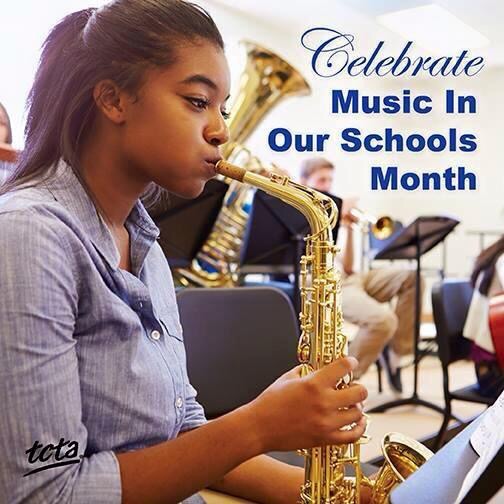
So I was saddened when I saw a promotional photo from the Texas Classroom Teachers Association this week, promoting Music In Our Schools Month. No doubt, we should be celebrating music in our schools. But let’s do it right, in a way that honors the art. 

A quick look at the photo below, and you’ll see a few things.  A sax player with no mouthpiece, no reed, and hands in no place that would actually help her play the instrument. We could go on. 

My sister is a professional musician, a jazz singer in Chicago. She is a poster child for the arts in school and all it can do for a learner. When I shared the photo with her, all she could do was tell me that it has been making the rounds in the music circles, as a punchline, I assume. 

Judge for yourself. Does this help or hurt the cause of arts and music education? 


And a big HT to Matthew Tabor for putting this on my radar.